Cold and Windy

The front finally came through last night—first a squall line with a wind wall and lots of cloud to ground lightening. From first crash of thunder in the west to last rumble in the east no more than 10 minutes, but enought to send Pax to the basement. Then a lull of about 20 minutes, followed by the main storm of wind and rain.

The first squall was enought to shatter two old and moribund sugar maples in the park. And this evening it is still blowing to beat the band. I should have taken the camera and gone over to Saugatuck to see the towering seas.

image.jpg
image.jpg

The hardest thing of all is to see what is really there.

--J.A.Baker

Waiting for Some Weather

Forecast for thunderstorms, rain, followed by wind. Wind warning in effect. So all day checking the sky but finding nothing but blue. However, this evening the wind is picking up and the barometer is dropping, and we coud be in for one of those storied "gales of November" like the one that took down the Edmund Fitzgerald. 

image.jpg

And, here, a selection from a group of poems printd in the Guardian as part of their series on climate change: 

Still Life With Sea Pinks and High Tide 

Maura Dooley


Thrift grows tenacious at the tide’s reach.

What is that reach when the water
is rising, rising?

Our melting, shifting, liquid world won’t wait
for manifesto or mandate, each
warning a reckoning.

Ice in our gin or vodka chirrups and squeaks
dissolving in the hot, still air
of talking, talking.

........

Reading a book called Rainwater Catchment Systems. It's a bit dry.  


A Fine Tuesday in November

Once again frosty in the morning but bright and warm in the afternoon.  Great walking weather, though after the big loop I arrived home sweaty.

Note Mr. Squirrel.  

Note Mr. Squirrel.  

In honor of what would be Carl Sagan's birthday, two quotes: 

 We inhabit a universe where atoms are made in the centers of stars; where each second a thousand suns are born; where life is sparked by sunlight and lightning in the airs and waters of youthful planets; where the raw material for biological evolution is sometimes made by the explosion of a star halfway across the Milky Way; where a thing as beautiful as a galaxy is formed a hundred billion times - a Cosmos of quasars and quarks, snowflakes and fireflies, where there may be black holes and other universes and extraterrestrial civilizations. How pallid by comparison are the pretensions of superstition and pseudoscience; how important it is for us to pursue and understand science, that characteristically human endeavor.

***************************************** 

 If we can't think for ourselves, if we're unwilling to question authority, then we're just putty in the hands of those in power. But if the citizens are educated and form their own opinions, then those in power work for us. In every country, we should be teaching our children the scientific method and the reasons for a Bill of Rights. With it comes a certain decency, humility and community spirit. In the demon-haunted world that we inhabit by virtue of being human, this may be all that stands between us and the enveloping darkness.

....................... 

Also today the 40th anniversary of the loss of the Edmund Fitzgerald.  


Wings Above, Leaves Below

As I stepped outside this frosty morning I heard what sounded like some rather loud sawing. which, of course, I supposed, should be expected here in noisy village. But that is when expetations led me astray. By the time I got my head on straight all I saw was the tail end of five or six sandhills winging loudly out of sight just above the treetops.

On our morning wak through Starin Park Pax and I enountered the usual abundance of squirrels. Looking whichever way we might, we were never able to seen none, and a typical 360 revolution revealed at least half a dozen.  These are industrious beings, working from sunrise to sundown, hopping endlessly everywhere, crisscrossing every square inch of terriory, in their desire to be prepared for winter, I presume.

Then a bit farther along, we came across a flock of finches feeding on ash seeds, which is somehing I have never seen before. If the emerald ash borerer has not yet arrived, ash seeds, those the slender little winged lances, are innumerable. So it looks like these finches have an endless, moveable feast, at least for now. Another perfect day—frosty in the morning, but bright, and still, and almost warm in the afternoon. 

image.jpg

Rockport style green chili for dinner tonight.  

The Path

Books first, once the sandman had departed and we were all bright-eyed and bushy-tailed, Then breakfast a the pancake house, followed by strenuous fun at Doctor's Park. And then the parents came home.

Hard frost overnight, followed by a beautiful late autumn day. 

image.jpg


From the book The Path by Chet Raymo:

In my daily rambles along the path, I have been inspired by a famous observer of the Irish landscape, the early-twentieth-century naturalist Robert Lloyd Praeger, who walked over all of Ireland "with reverent feet," he said, eschewing motor transport, "stopping often, watching closely, listening carefully." And although I have aspired to Praeger's pedal reverence, I know I have fallen short. Another thirty-seven years walking my path would not do it justice. The contemporary writer and cartographer Tim Robinson, another close observer of the Irish landscape, defines something he calls the "adequate step," a step worthy of the landscape it traverses. The adequate step takes note of geology, biology, myths, history, and politics, says Robinson in Stonesof Aran. It also includes the consciousness of the walker. And even all of that, he states, is not enough. No step, or series of steps, can ever be fully adequate. "To forget the dimensions of the step is to forgo our honor as human beings," he writes, "but an awareness of them equal to the involuted complexities under foot at any given moment would be a crushing backload to carry."

A crushing backload, indeed: fiddlehead ferns, downy woodpecker, pickerel, granite flake, Canada mayflower, moonrise, bluebirds, spring peepers, monarch butterflies, glacial scratches on bedrock, and, of course, the human history of my path, which in its transformations over the centuries encapsulates in many surprising ways the history of our nation and of our fickle love affair with the natural world. Step by step, year by year, the landscape I traversed became deeper, richer, more multidimensional, always overflowing the mind that sought to contain it. Ultimately, almost without my willing it, the path became more than a walk, more than an education, more than a life; it became thePath, a Tao (Way), a thread that ties one human life and the universe together.

A weed plucked at the side of the path might have found its way to the New World in a seventeenth-century sailing ship. Scratches on a rocky ledge evoke colossal mountain-building events on the other side of the world millions of years ago that modified the planet's climate and caused glaciers to creep across New England. The oxygen atoms I suck into my lungs were forged in stars that lived and died long before the Earth was born. It is something of a cliché to say that everything is connected to everything else, but when you know one place well — not just intellectually but with the deep-gut knowledge that enters through the soles of your feet — connections just keep popping up. A character in Anne Michaels's novel Fugitive Pieces says: "If you know one landscape well, you will look at all other landscapes differently. And if you learn to love one place, sometimes you can also learn to love another." Having learned to know and love my path in all of its local abundance, the light-years and the eons no longer seem quite so forbidding, tropical rain forests and droughty deserts seem not so far away. A minute lived attentively can contain a millennium; an adequate step can span the planet.

Southerly

Big blow from the south—lots of leaves migrating north. Maybe, perhaps, the last of the weird warmth?

Sue once again down doing Jayne stuff, with me off to the annual visit wiith my cardiologist at Mercy in Janesville. Dr. V is a youngish, athletic bicyclist and motorcycle rider, and, strange to say, the father of five. The only thing is, he now has only one leg, the other having ben lost about a year ago in a motorcycle accident. He's a great guy.  Life can be rough, and I could tell he he working hard to deal with what happened. Makes me feel fortunate to have nothing more than rotator rehab to get through.

Hosta has-been. 

Hosta has-been. 

Endless Summer

Another beautiful day—perfect weather for waking to Ellie's school to (pick her up), and with Maddie for playing at the park, and with Beccca and Renee for going out to dinner.  

The continued warmth, however, is extennding tick season, and we have found four on Pax over the past two days. His treatments, which had been suspended, are reinstated.

image.jpg
image.jpg

The Upside of Global Warming

Another perfect day here. It may be getting too hot for human life in the Persian Gulf; and many of the the islands in the Pacific may be awash; but it's a delightful November in Wisconsin. After a long dog-walk we went grocery shopping at the Pig in Milton (just 15 minutes away). It's a pleasant, well stocked (has Ma Bench's herring) store, and cheaper than our former Whitewater Sentry, so it will likely be our goto grocery. But when we are feeling fancy, it will be the gigantic new Festival in Janesville, only ten minutes further on.

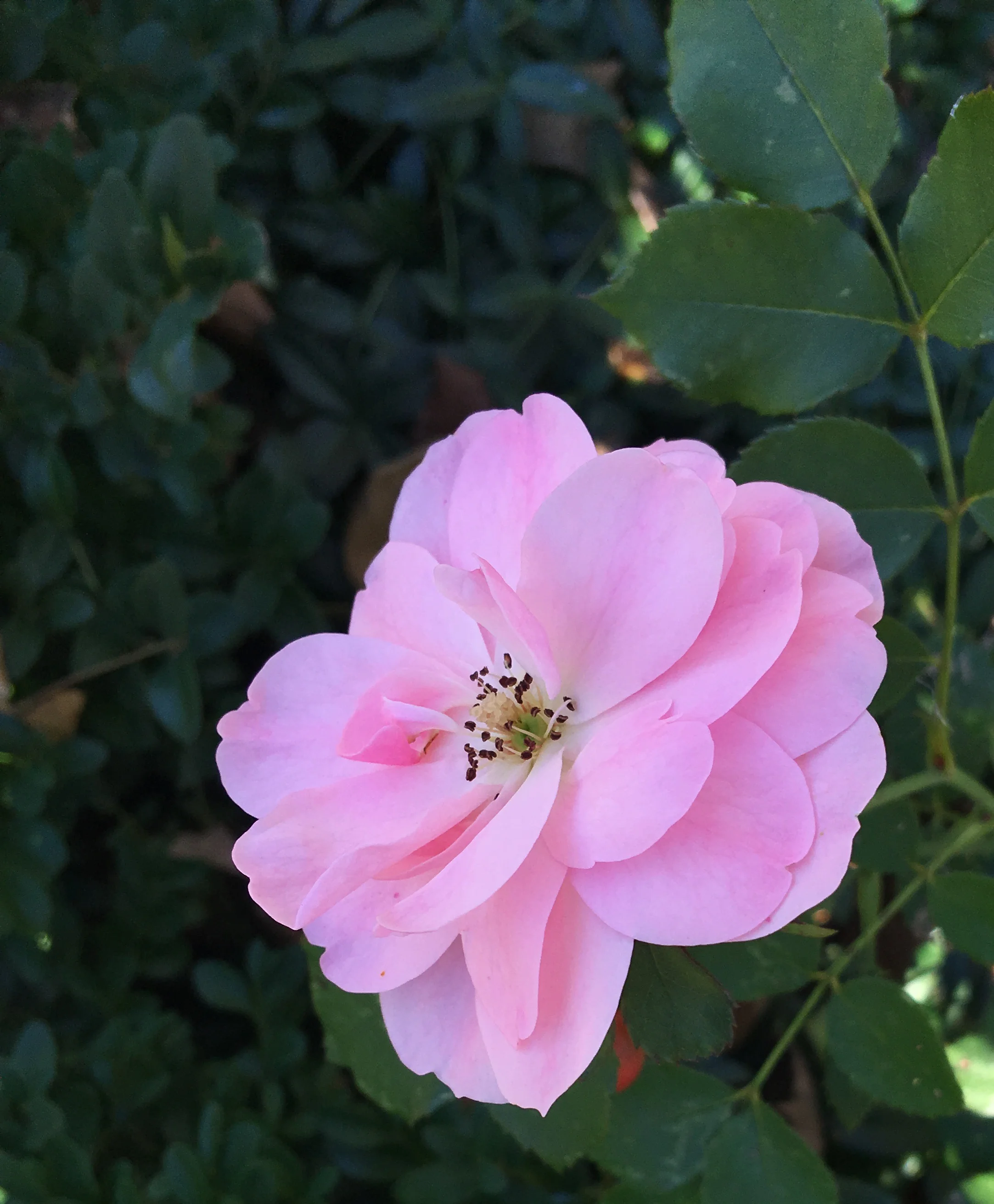
Neighbor Kathy's roses have no thought of blooming cessation.

Neighbor Kathy's roses have no thought of blooming cessation.

Spectacular (Indian) Summer

Ever so beautiful.

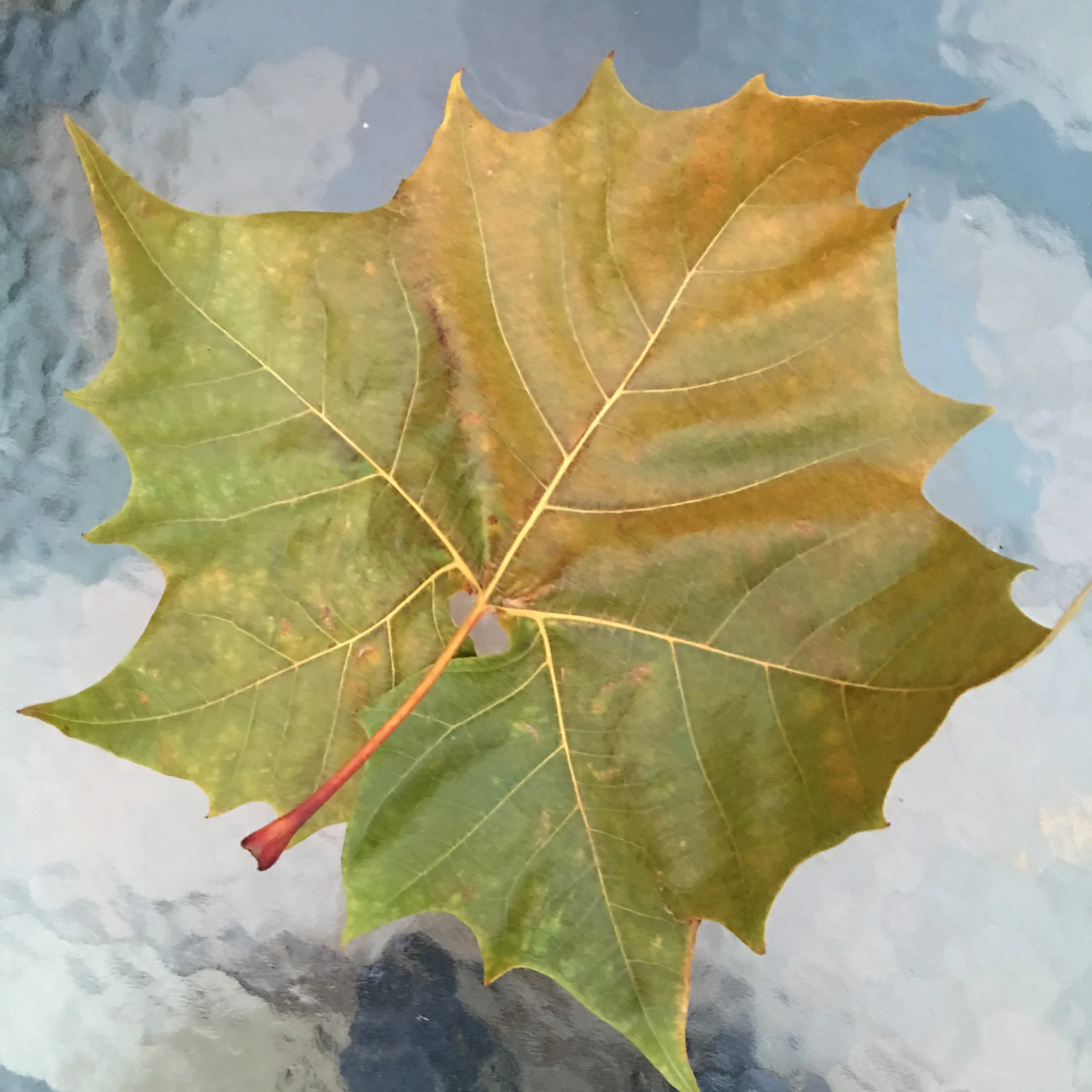
Sycamore, the pterodactyl of trees.

Sycamore, the pterodactyl of trees.

Brief selection from: Payne Hollow by Harlan Hubbard

In winter, woodcutting; in summer, gardening. Our calendar is never so precisely divided, for cookwood must be rustled up in summer and the garden is a year-round concern.

All our living is regulated by the revolving seasons. They determine what we do, what we think and talk about, what we eat, the pattern of each day. Our house adjusts to the seasons, opening in the summer and closing against the winter's cold. The time of our getting up in the morning depends on when the sun rises. Who would want to lie abed in a summer dawn, when the air is filled with birdsong? On the other hand, there is not much use getting up in the dark, even during the shortest days of winter; yet I often do so, assisted in extending the day by a late-rising moon, which furnishes light enough for woodcutting, even when it shines through a layer of cloud. It is never so dark that my feet cannot find their way on known paths. Firewood or something is always waiting to be carried up the hill. I can grind flour by touch. A lantern provides enough light for many other jobs — threshing beans, cracking nuts, sharpening an axe. The hungry goats do not mind being waked up, fed and milked at an early hour. Writing goes well, close to a stove where a little fire burns; or I just sit there in that brief period of detachment between night and day, my thoughts following strange paths unknown to sleep or waking.

Sometimes the dark becomes wearisome, I feel my loneliness and look in vain for the faintest glow in the eastern sky or for a lighted window across the river. When at last the strengthening light brings release it seems to promise fair and untried fields of action. All too soon the colors of dawn fade and the familiar world reveals itself.

March, not January, is the two-faced month, for its weather can be that of winter or spring. In our calendar the balance swings from woodcutting to gardening in March. There come a few warm, balmy days when fires are allowed to die and a tantalizing smell of spring is in the air. I take a favorite hoe from its winter resting place and go down into what was last year's garden…

… The very beginning is perhaps the best part of a garden. Now the breeze feels as soft and sweet as it used to on the first spring day that I could go barefoot. The whistle of a cardinal comes from far off through the hazy air. The sun, riding higher in the sky, arouses not only the buds and seeds but also the dormant hopes of the gardener. The memory of past mistakes and failure has been washed out by winter rain. This year his garden will be the best ever.


Spooky Action at a Distance

Apparently it's true and Einstein was wrong. Through "quantum entanglement" something can happen here and some far there simulatneously and what happens here affects what happens there even though there is no way it could do so.

Now here, locally, the spooky action is occuing at the front door with strange little creatures knocking and asking for sugar. This causes an action in Pax (resembles barking) even though he is enclosed in a distant room.  I therefore have to conclude that Pax is a quantum mechanic.

Steady, cold rain all day, but through some spooky action, stopping just in time for the creatures to emerge. 

image.jpg

Quiet

Cold, clear night; morning fog. 

image.jpg

Sue down south helping Jayne. Pax and me? We lay low, though we did go for a drive (18 minutes to the Festival Foods store in Fort, just as a test). And it felt very good to be out and about doing stuff without the albatross of a sling round my neck. Otherwise, a very quiet day--little wind, few sirens, and just a little noise from band prctice at the stadium.

Fox Point

Over to Fox Point to help Ab cear up the basement, still pretty much a shambles from the move. Also incuded, lunch at a tasty little restruant in Whitefish Bay. Sometimes its fun to go a little upscale. Here in Whitewater we have learned that our only real grocery store is closing, leaving us with a somewhat minimal Walmart grocery section. A town without a grocery store is, in my opinion, just a little downscale. 

image.jpg

Gray, Damp, and Windy

Very much autumn, and pleasant in its own way.

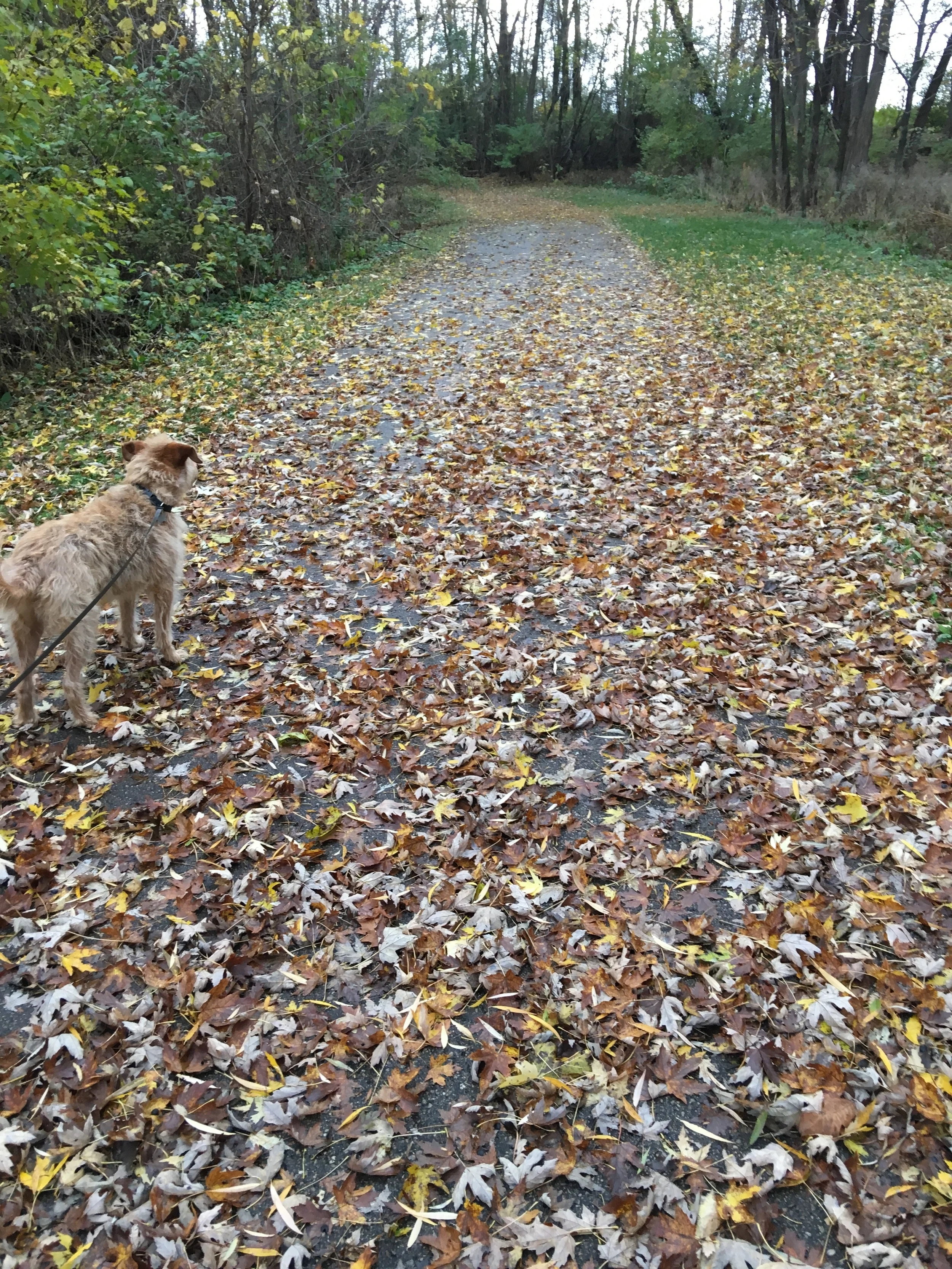
Leaf-strewn path.

Leaf-strewn path.

From the Prologue to the Audubon book:

Up they came from the south, following the warming days, in a great wave that burst open like a fan and covered the continent — blue geese and snow geese, canvasbacks and mallards, bald eagles and sparrow hawks, passenger pigeons in flocks so immense and tightly packed they barred the sunlight from the earth, huge birds like ospreys, small birds like warblers and sparrows which would disappear inconspicuously in the woods and fields, brilliantly colored birds like the wood ducks, mutely colored birds like mourning doves — all the tremendous variety that composed one of America's miracles. Some flew at night, some in the daytime, some stopped often for food and water, others flew for hundreds of miles without ever pausing. The wave seemed endless and inevitable and infinite, something no man could ever check, no matter how many shots he used, no matter how many arrows he put to his bow, or how many bird traps he set. The supply was inexhaustible. Shooting a hundred birds, or five hundred birds, or a thousand birds, was like taking a cup of water out of the ocean. What was true of the birds, flying their unmarked but centuries-old routes in the sky, was true also of the land beneath them and the things that grew on it. There were enough trees to replank every ship in the world and not leave the mountainsides bare, enough to house whole cities and keep a nation warm during the winter nights, enough so no one worried about any individual tree or wasted time trying to save it. The best way to get wild honey was to chop the tree down. The best way to dislodge a bear or a raccoon was to chop the tree down. The best way to get sunlight around a cabin was to chop the tree down. The best way to keep the Indians from approaching a lean-to unseen was to chop down the surrounding trees. And the only way to grow corn or barley or rye or potatoes or cotton or jute was to chop down the trees. The axes rang out in a chorus of clanging steel and splintered wood from Mount Desert in northern Maine to the southernmost key on the tip of Florida, from the Atlantic coast to just as far inland as there happened to be men to wield the axes. And if there was not time to cut into the wood, to let the bark and the slivers fly at the touch of the bit, and watch the great trees crash into the nearby brush, their tops snapping off under the force of the enormous impact, they could always be ringed or burned. Starting a fire was one way to get rid of unnecessary, unwanted trees.

Animals? There were enough beavers to put a hat on every dandy in Europe, enough foxes and martens and minks to make a fur coat for every lady. Enough buffaloes to feed a nation and make sleeping robes for them as well.  Never before had men known such congregations of animals as the great buffalo herds contained, stretching as far as a hunter could see from horseback, herds grazing quietly on the prairies or, bunched together, stampeding with a force that made the ground shake and tremble beneath their feet.

There was enough water to slake the thirst of millions of people, to turn their mills, to float their boats — first canoes, then boats under sail, then steamboats puffing up the Hudson and the Delaware and the Ohio and the Missouri and the Mississippi and a hundred other rivers — boats that carried first explorers and trappers, then farmers and traders and merchants, and finally people who knew almost nothing about the land, had no link with it, hardly knew an oak from a maple, or a sparrow hawk from a mourning dove, and could not have worried less about not knowing. Yet there was still enough water left after it had turned the mill wheels and carried the boats, still enough pure water left to support the fish — the trout and the bass and the pickerel, the giant muskies, the sturgeon, and the catfish—catfish so large that often a single one would make a meal for an entire family.

 As for land, there was enough for everybody. A man did not need to be rich to own land in America. He had only to be strong enough to take it,  strong enough to travel to it and grab it from the Indians or the forest, strong enough to cut down the trees and clear it. Sometimes he had to pay for it with money, but if the price was too high in Massachusetts, he could go to New York. If it was too high in New York, he could move to Kentucky or Texas or Arkansas or Indiana or anywhere else, and the only thing that could stop him was the Pacific Ocean. He did not even have to care for the land after he got it. He could plant tobacco in Virginia, cotton in Georgia, onions in Connecticut, until the land was exhausted and lay naked and barren in the sunlight and never bother to fertilize it, for it was not worth fertilizing. He merely loaded his family into wagons and moved westward and took up new land. When that, too, was exhausted, he packed up his family again. Land was cheap. There was enough land for everybody.

So the people came to take the land, first in a trickle, a few lonely adventurers, and then in increasing swarms. Long-bearded Spaniards with swarthy skins. Laughing French voyageurs.  Hard-drinking Anglo-Saxons, who fought and cursed and scrapped and carried a Bible in their wagons. Poles and Hungarians and Italians and Germans and Scandinavians, each anxious to share some part of the continent's riches. Always in the lead were the explorers, LaSalle, Hudson, Champlain, Croghan, Boone. Then the settlers, the men who were as interested in staying as they were in moving. They cleared the fields and built the farms and sowed the crops and bred the children, driving their roots into the ground and making a living out of it and establishing families that some day would move west again. Then the traders and the merchants and the doctors and the lawyers, the flatboat men who steered the great clumsy arks down the inland waters, the bandits with guns in their hands and prices on their heads, the scientists, the statesmen, the heroes — some moving here in hope of a better life than they had ever known; some, like the black-skinned, sweating slaves, brought here against their will to find one worse than they had ever imagined.

Between them all, riverboat gambler, college professor, New England farmer, Virginia planter, they took their toll. They shot the golden plovers by the thousands. They clubbed the passenger pigeons to death by the millions in Kentucky and Pennsylvania. They stripped the fields of their fertility in Mississippi and Georgia and Vermont. They poured their wastes into the rivers, because it seemed cheaper to get rid of waste that way than any other. They trapped beavers by the thousands, skinned them, and shipped the pelts abroad, while the corpses rotted in the woods or provided food for the wolverines. When they were hungry and wanted meat, they shot a buffalo or a bear or a deer and sometimes they made only one meal from it. Animals were plentiful, and time was short. It required time to dress and cure a whole animal.

Sometimes the men-and their women, too — were harsh and brutal and cruel. They would cheat an Indian or swindle him or lie to him. Although the Indian was here first, his numbers were insufficient to defend his own. They would lash a Negro slave until his back was bloody, shanghai a sailor, or make children work in factories. But, for the most part, they were good people, unthinking perhaps, but good. And they had in common a dim, obscure vision of something they wanted, although they had trouble putting it into words and saying what it really was. Only a few of them could do that, those with a special mastery of language and a special vision. Even fewer could get it down in words about the land and the trees and the prairies and the mountains and the great flights of birds and swarms of animals. It was all too big. They could see, but they had trouble saying what they saw, or writing it, or painting it, and making others understand.

So when the people slaughtered the birds, shooting them down by the thousands, or burned the forests, or left the dead buffaloes rotting and festering in the sun, it was not so much from brutality as from carelessness, not so much from thinking about what they did as from not thinking about what they did. Nobody had told them.

They were pragmatic. They did not believe the buffalo herds could be exhausted, until they had pushed them to the verge of extinction, did not think the flocks of passenger pigeons could be used up, until the last pigeon finally died and the species vanished from the earth altogether. Only when they saw it with their own eyes did they start believing, and often it was then too late. What they needed were men to do their seeing for them, whose vision reached a little further than theirs, who did not have to wait until a bird or an animal or a tree disappeared to know it could disappear. Or not even that. Who could make them, for a fleeting instant, see a bird for what a bird is, make them think of golden plovers as something more than a crop that could be harvested free except for the cost of shot, of beavers as something more than fur for men's hats, of trees as something more than firewood or planks.

There were not many such men.

But there were some. Just enough to check the ravage before, once and forever, it was too late.

Just enough to give the others one last, one irretrievable chance to save what was left.


In Libris

It's always fun to visit the Dwight Foster Public Library in Fort, and today, after breakfast, we spent a bit of time there, me in the reference section paging through about a hundred plates of Audubon's Birds of America. Though I have encountered the book before, and know some of the images, I thought it only proper to look more closely—seeing as I am nearing the conclusion of the Audubon biography, which is really quite a strange tale.

Leaving the library, we headed to the Bark River, where all of us, Pax included, enjoyed a good walk in the out-of-doors. Driving home we followed the Rustic Road along the Bark almost all the way home.

The barometer has dropped on an east wind, and we now have light rain. According to my WeatherBug app, the nearest lightning strike is 732 miles away, so no worries on that front. 

Looking forward to the next episode in season 4 of Longmire.

Sunday Drive

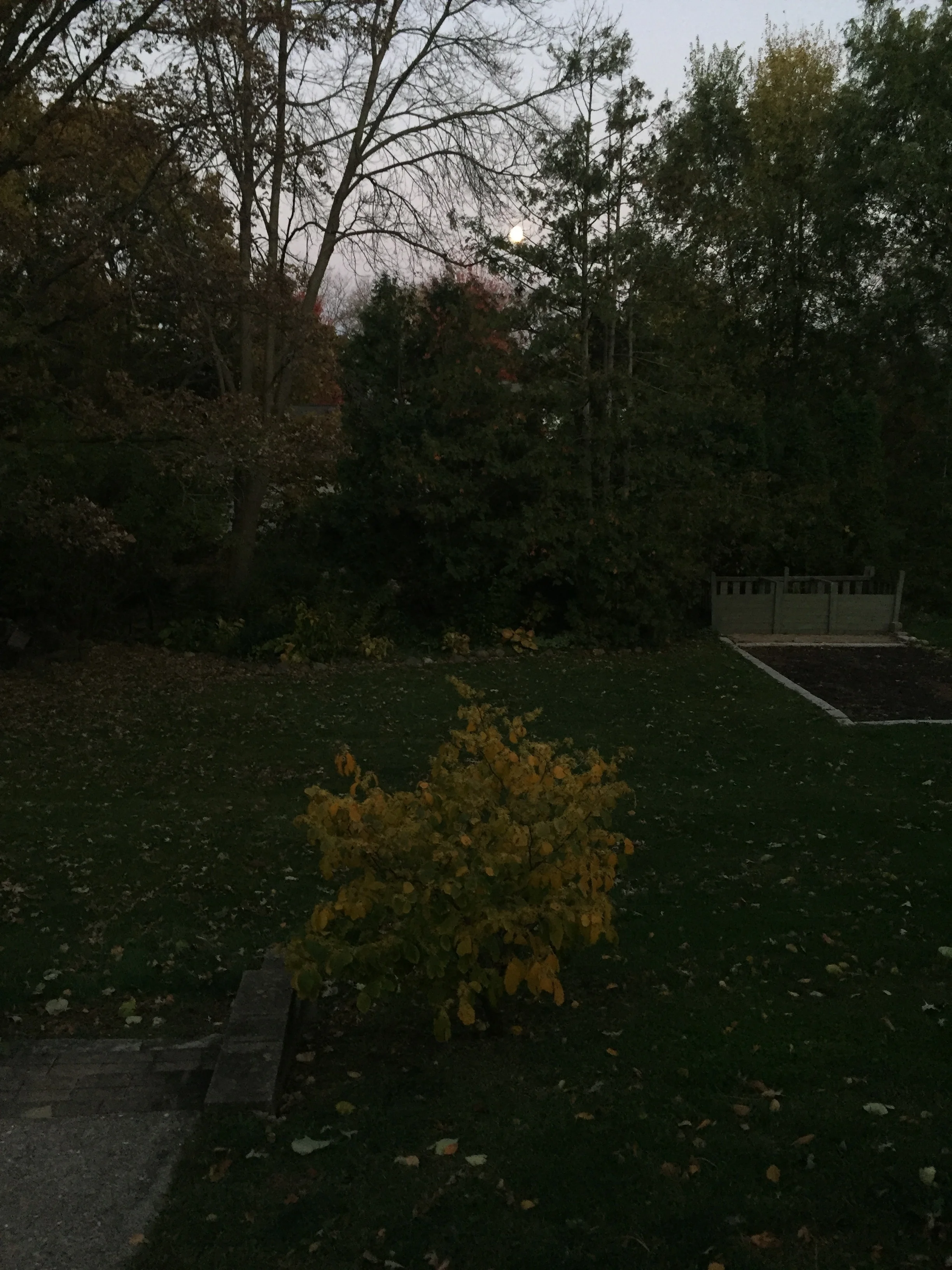
It being a beautiful Sunday, and me incapable of raking leaves, we decided to go for a Sunday drive...to Oconomowoc and then through northern Kettle Moraine country to Fox Point. Scenic and relaxing all the way, and brief but fun opportunities to check in with all five grandkids (and their parents). Back home, a waxing, almost full moon rising over the backyard.