South Easter
Intense sun and a hot north wind. Easter dinner with J & ME's friends Eileen and Vester.
Intense sun and a hot north wind. Easter dinner with J & ME's friends Eileen and Vester.

...but after breakfast at Rosita's and dinner at Captain Benny's it's hard to know what.


...barbeque, and basketball.

And I'm just getting started.
Snny and perfectly pleasant.
Long drive. Multiple accidents witnessed. Two and a half hours getting through Houston. (Note to self: never again.) But to Rockport at last, and awaiting us for dinner freshly-caught drum sprinkled with neighborhood-grown lemon.
Pax is enjoying his old stamping grounds.

Six lanes down to two, then an accident reducing two to one. Over an hour getting around that.
Hike to the top of the mountain. Lunch at the Magazine Mountain Lodge overlooking Petit Jean valley and river far below. Dinner in Paris--bbq and catfish.

The very rustic cottage.

View from the heights.
From Whitewater to Magazine, Arkansas.
Last two hours twisting through the Ozarks. Stiff headwinds all day--at the moment roaring through some surrounding pines.
Now sitting on the deck of a very rustic cabin 2.5 miles down a gravel road. A fine view of the highest point between the Alleganies and the Rockies.

Pleasant day. Mostly sunny, chilly, but with a moderate SW breeze.
Pax got a good brushing, a bath, a long walk, another brushing, nail clipping, a bike ride, and some preventative medicinal treatments. Now he's nervous, because of all that, and from seeing suitcases hauled to the car. I think he smells Texas.

The tall dead grasses in the prairie rustle loudly even in a slight wind. All burned off last year. Again this year? Surely things are greening up down below.
Pretty chilly going downhill and up wind, but still highly enjoyable.

This morning, in honor of Sue's actual birthday, we followed our usual routine and went out for breakfast at the very unassuming, but still very good, Parkview Restaurant in Milton, where, in deference to the large number of people in a small space, we shared a table with two omelet aficionados. On the way there we listed, or rather tried to list, all the places to eat in Rockport that we hope to revisit. Even forgetting some, it looks like at least two meals a day will have to be eaten out.
Lots of robins in the neighborhood, working hard to keep the earthworm population in check. In one small patch of parkland I counted 18 of them, clearly focused on the job.
With the kids in Fox Point while the parents attended a school. Foundations fundraiser.
The weather continues cool.

Cloudy and cool. The initial spring explosion has been tamped down, and now things are progressing at a more natural pace.

After all, it's still March, and March means crocus, squill, and basketball.
A bright, cool day with a slowly diminishing wind.

Creek over its banks and moving fast.

Afternoon in Oconomowoc with the girls, followed by dinner and a little un-birthday party for Mimi.
Heavy thunderstorms last night. Rain this morning. Wind this afternoon. Lots of wind. Gusts so strong they've blown the fir right off the fir trees and the wood right out of the dogwoods.

And talk about gusts! I don't really understand them. You can hear a roar off to the right and see the trees bent in half. Then a roar off to the left and the trees bent double. And then, a few moments later. you're blown away. How does the wind get so chunky? What gives the gusts their chutzpah?
I think Lakes Michigan and Huron collected a lot of water over the past 24.
...No, just half a dozen red-wings contesting squatting rights at a little pond.

It's loud and raucous, with lots of displaying, but no sucker punches. About half a dozen of these guys are trying to stake claim to this insignificant retention pond. In my opinion it's not worth the fuss, and the losers are almost certain to find someplace better.
Light rain, followed by a heavy downpour of about half an hour's duration, followed by sun, followed by clouds. Even a rumble of thunder off in the distance.
This will green the grass.
A short, well edited video of the Nite Nationals. Lots of shots of Wombat (red, #10) with Bri at the helm; and a fun shot of Solstice (yellow, #165) with Tony at the helm hiking up while rounding the weather mark.
Vi will be keeper of the seeds.


If things go well, we should be able to harden them off and plant them out sometime in June.

The radicle is the proto root. Chestnuts have long tap roots, so the starting containers need to be tall.
Steady rain all day. Chilly. What might be expected in early spring, in fact better than what could be.

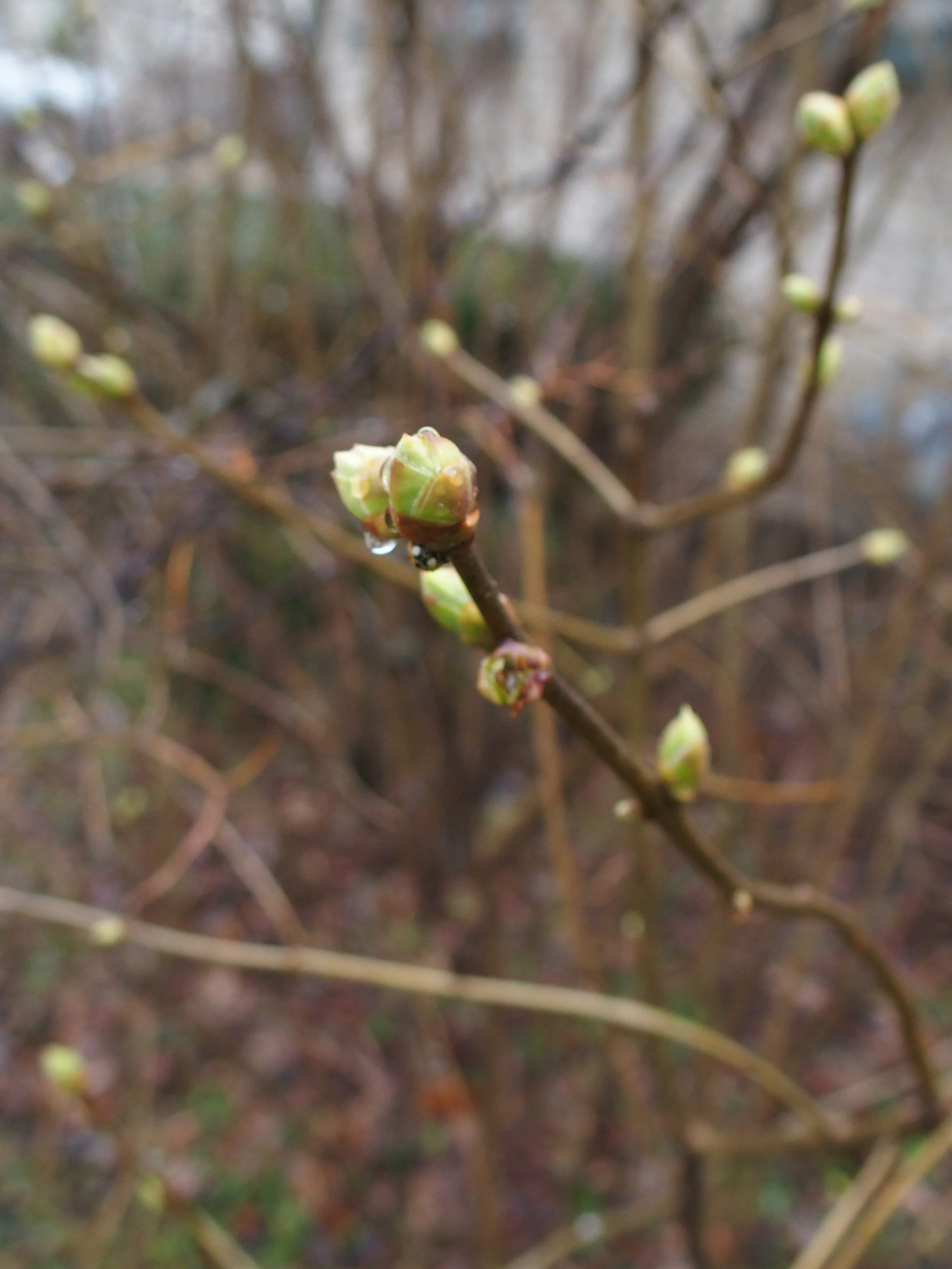
Fun day at the St. Patrick's Day parade, and doing garden work at Bywater Lane.

We had a sky box at Grand Avenue Mall

Lots of green here.

Katy stained half the new raised bed.

Making the mix for soil blocks.

And the blocks being made.
And four new ones.

These are not chestnuts.
Foggy morning followed by a sunny day.
The American chestnut was perhaps America’s greatest tree—until the chestnut blight was thoughtlessly imported from the Orient in 1904. It was giant tree with beautiful rot-resistant wood and a tasty and nutritious nut that fed a vast amount of wildlife and was an important food source for native Americans and European settlers. Some autumns chestnut mast would be over ankle deep in Appalachian forests.
Within 40 years of the blight’s arrival in New York over 4 billion chestnut trees were dead.
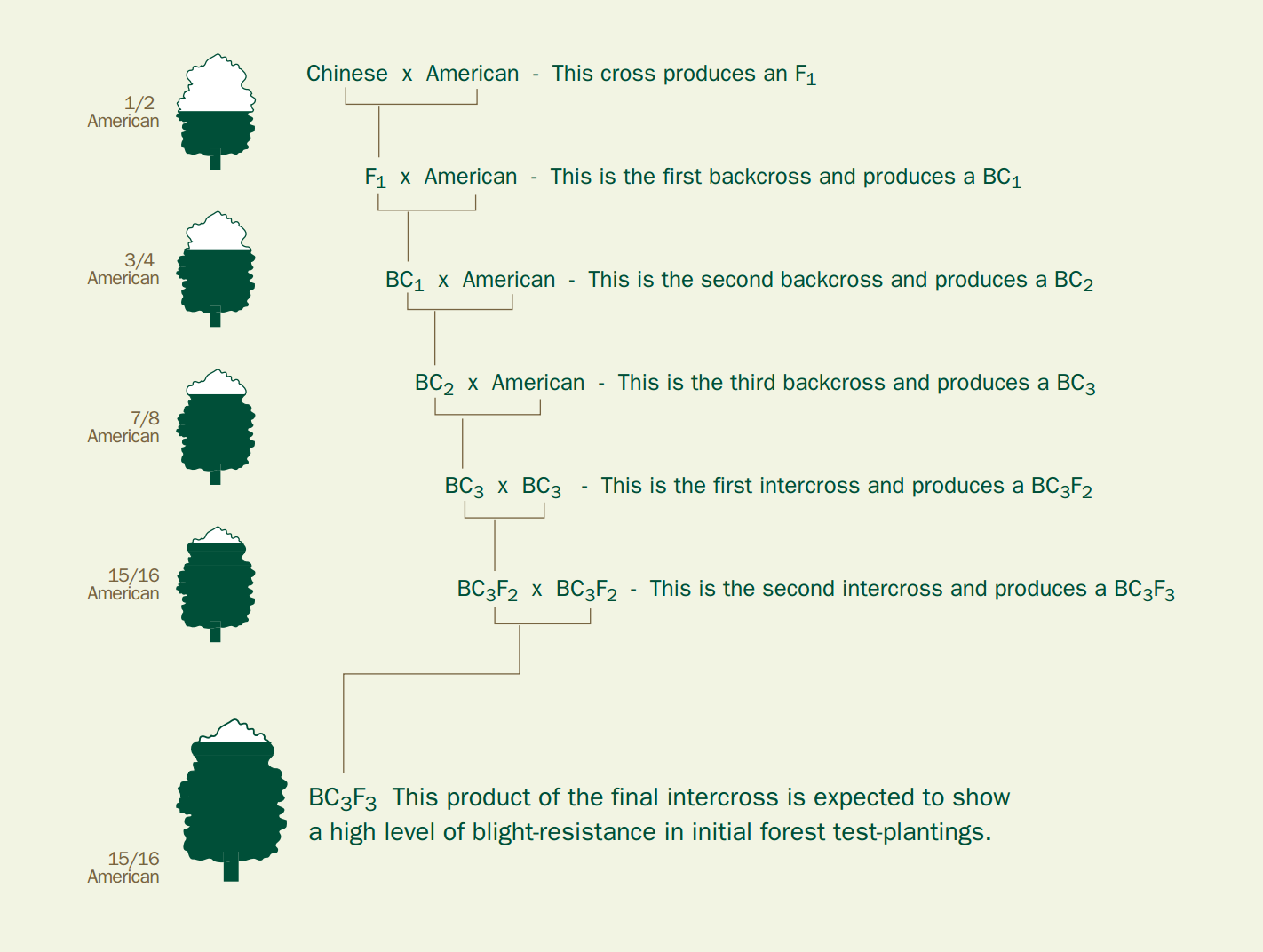
But a few survived hither and yon, including several in Wisconsin, and in 1983 the American Chestnut Foundation initiated a herculean effort to bring the tree back, employing selective breeding/backcrossing.
First an American chestnut is bred with a blight resistant Chinese chestnut, and the nuts are planted. This is the first filial or F1. At about 8 years of age these offspring are infected with blight fungus. Only those few trees showing exceptional resistance are kept. These are then bred (through controlled pollination) with an exceptional native American chestnut which shows some blight resistance on its own. The nuts are planted. This is back cross one, or BC1. The process in repeated until the third back cross is reached. Then two BC3 trees are bred. Finally, the best trees of this generation are bred once more. This makes for BC3F3 which is very much American but with good blight resistance.
BTW, the Chinese tree, apart from its blight resistance, is a wimpy little cousin the the American tree, so the goal is to borrow its good qualities, but get back as close as possible to the American original.
When neighbor Vi lost her huge silver maple last summer (at last giving our garden sufficient light) I suggested she might want to plant a chestnut. She agreed, and together we joined the ACF which entitled us to 4 BC3F3 seeds. The seeds arrived today. Vi has agreed to be tender of the seedlings. If all survive, each of our yards will be home to a marvelous tree, and, with our annual reporting responsibilities, we will be contributing in a small way to its restoration. And we might have two little trees looking for a good home.

Only enough energy to pick up pine cones in the back yard, and watch basketball.

But there were quite a few cones of the the red pine, Pinus resinosa. These cones drop their seeds beginning in the fall of their second year on the tree, and the cones themselves drop off the following spring. I forgot to count, so have to estimate, that the pickup amounted to 50 cones. Also down on the ground were the tips of many red pine twigs, presumably cut by squirrels, for some reason. Is it to eat the buds? I know that the little pine squirrels on Manitoulin cut and drop cedar and spruce cones in late summer and fall, but when they do it it's because seeds are in the cones.
The red pine is a conifer, and thus a gymnosperm, and thus quite bit more ancient than an angiosperm like the crabapple or oak.
