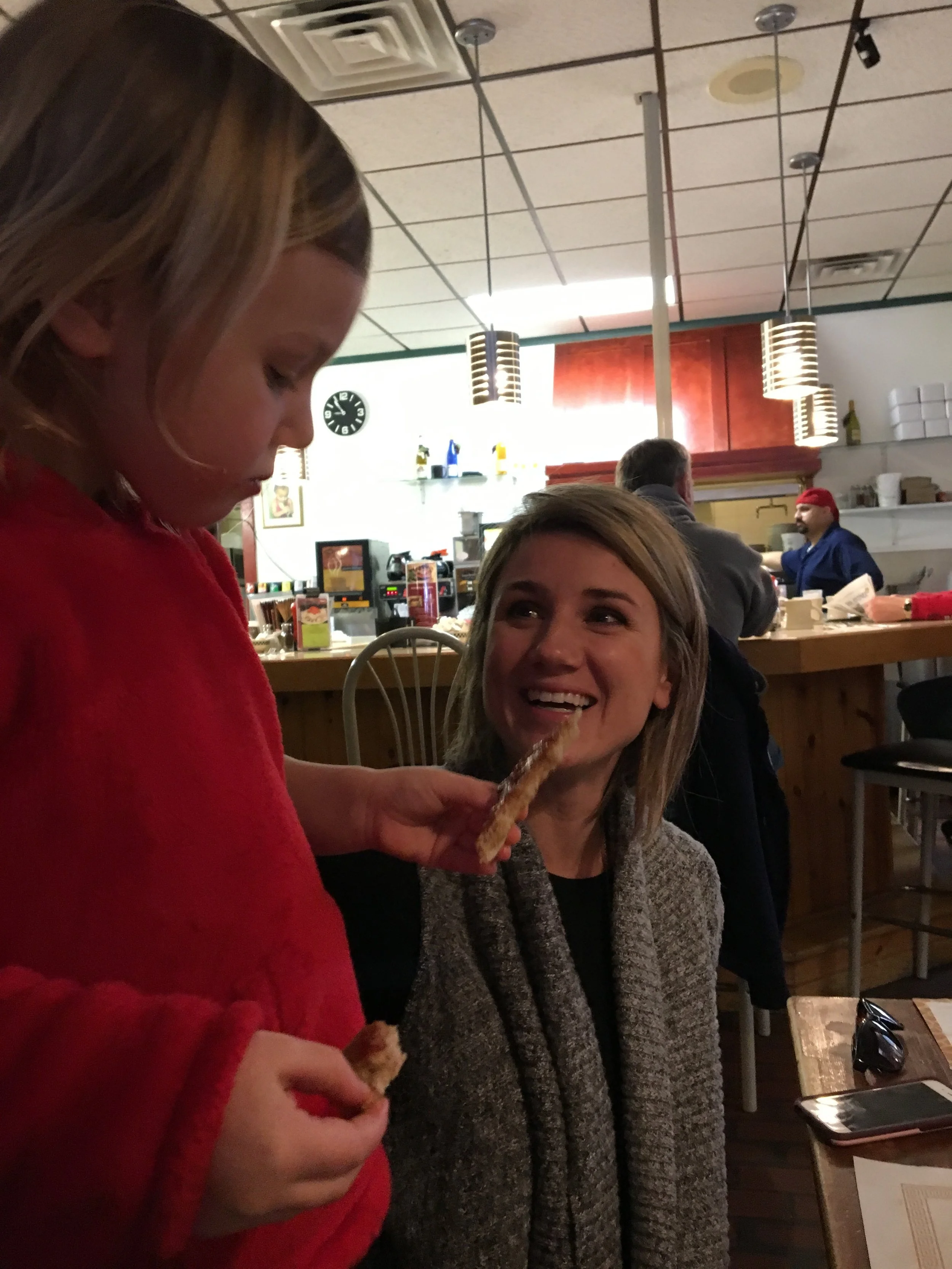
Pool Time
It's been a summery spring break.
We skipped the boards but expect others won't. Best time to visit the pool is noon to two, the lifeguard said. Then you can have it almost all to yourself.
NCAA basketball tonight.
It's been a summery spring break.


We skipped the boards but expect others won't. Best time to visit the pool is noon to two, the lifeguard said. Then you can have it almost all to yourself.
NCAA basketball tonight.
The best place for oysters, shrimp, and fish tacos this side of the prime meridian. And today, it being Wednesday and we getting there early, not overly crowded.

Another warm and sunny day.
Interesting weather pattern here, in place ever since we arrived:
At night the wind drops and the humidity seems to build. In the predawn hours everything outside is dripping wet—through the partially open bedroom window I can hear drops falling from roof to patio and everything else below. Morning comes late (being at the western edge of the central time zine at this time of year and with daylight savings in effect). When the sun finally does rise it’s hot and bright and the atmosphere is muggy. By mid morning a wind has come up and the humidity has dropped. The thermometer starts pushing towards 80. By late afternoon the wind has built to a strong blow, and the air no longer feels humid. Then the sun sets, the wind quits, and moisture again settles over the land.
Little trip down to Port Aransas.

Miles and miles of beach. Water warm enough for swimming.

The south jetty, with a shrimp boat and freighters (way off).

Pax got into his wave chasing game, the one in which he races along biting the rollers. This time he found that the waves didn't taste so good and wanted a good long drink of fresh water once we got back to the car.
Both celebrated here in sunny, south Texas warmth. Long walk in Memorial Park, bike ride, hot-tubbing, steak dinner--various activities distributed amongst us. Happy birthday, Mimi.
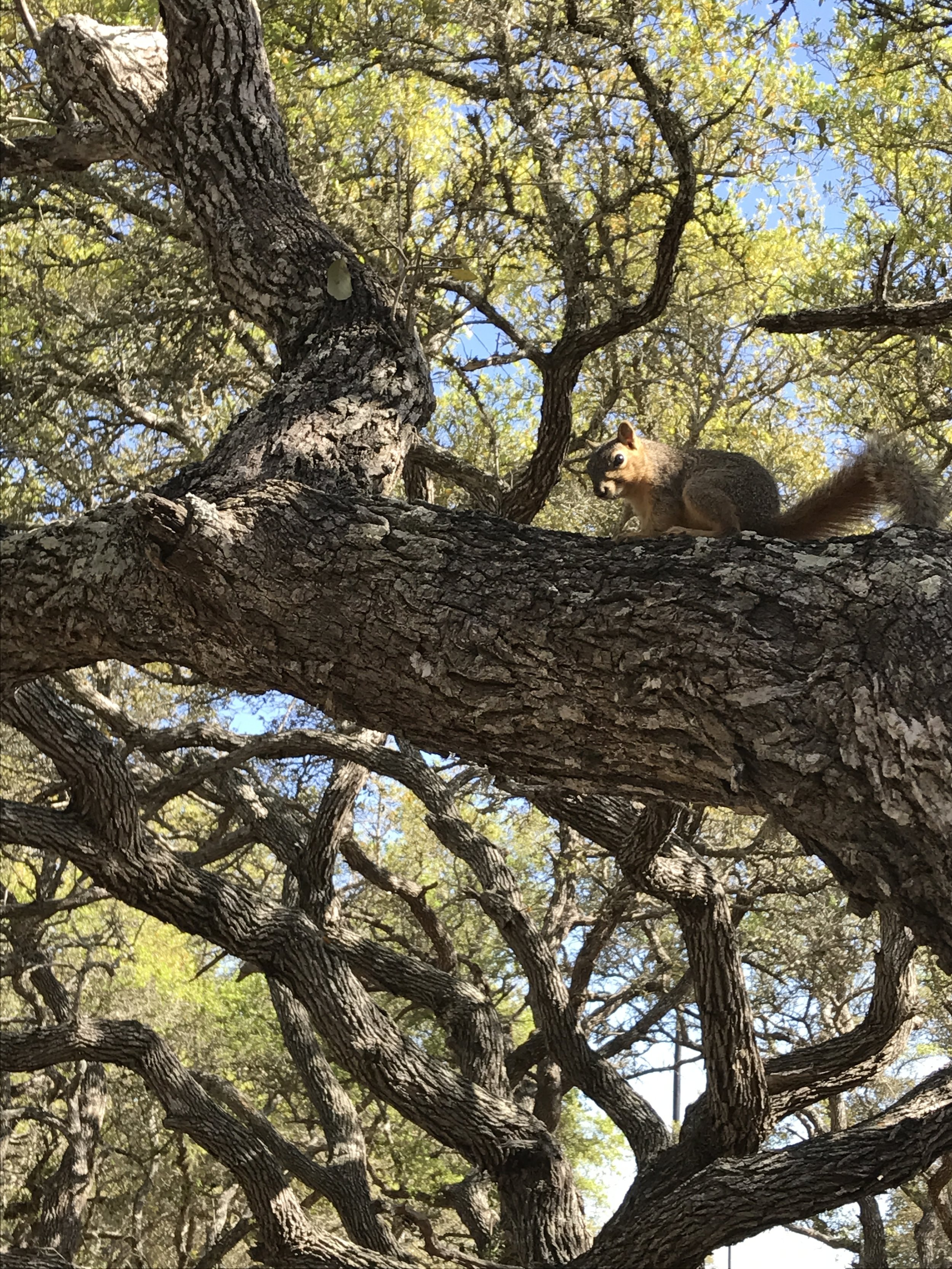
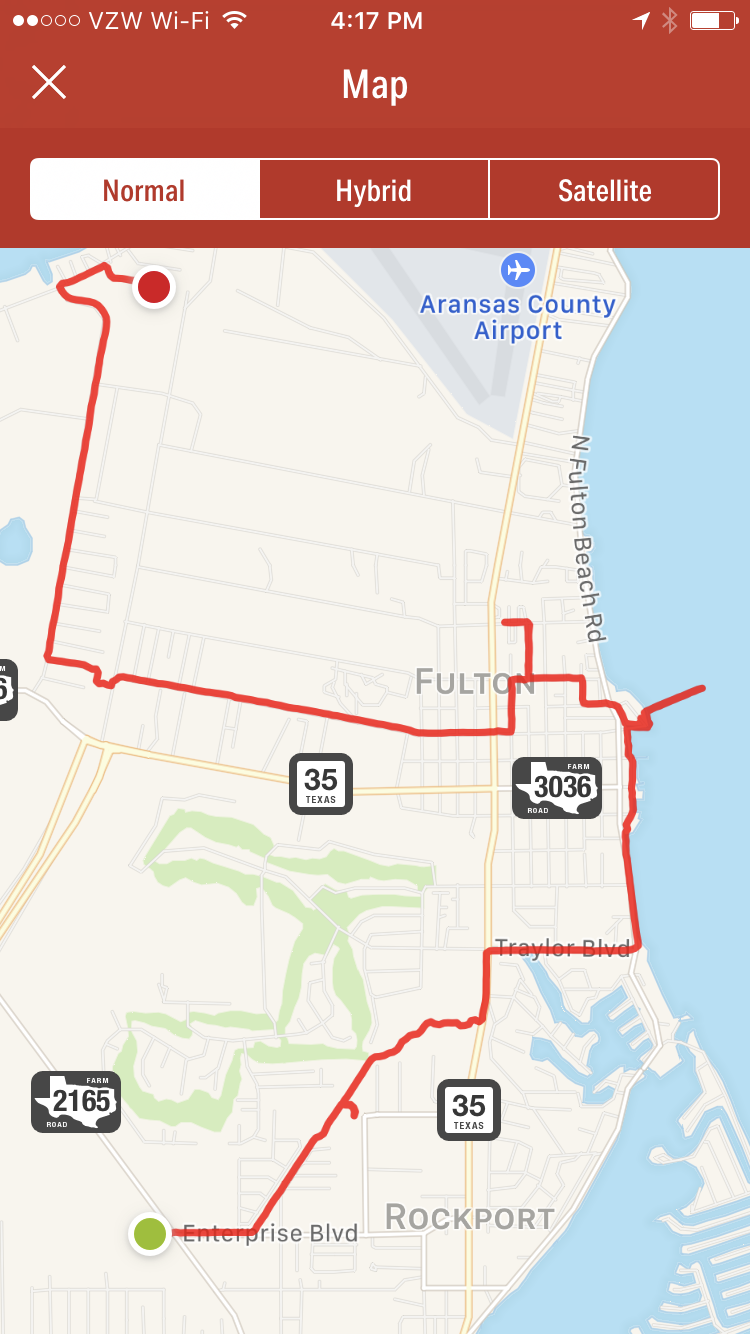
Note on this map of today's bike ride how I was able to ride quite a way out into the bay. It's kind of like skiing barefoot. The little hook near the beginning of the trip (green dot) was a quick detour to the swimming pool. The angular jog fairly near the end is a walk through the woods from one road to another.
...around Rockport and Fulton.


Looking for some of the fabulous Texas costal bend avian wildlife.
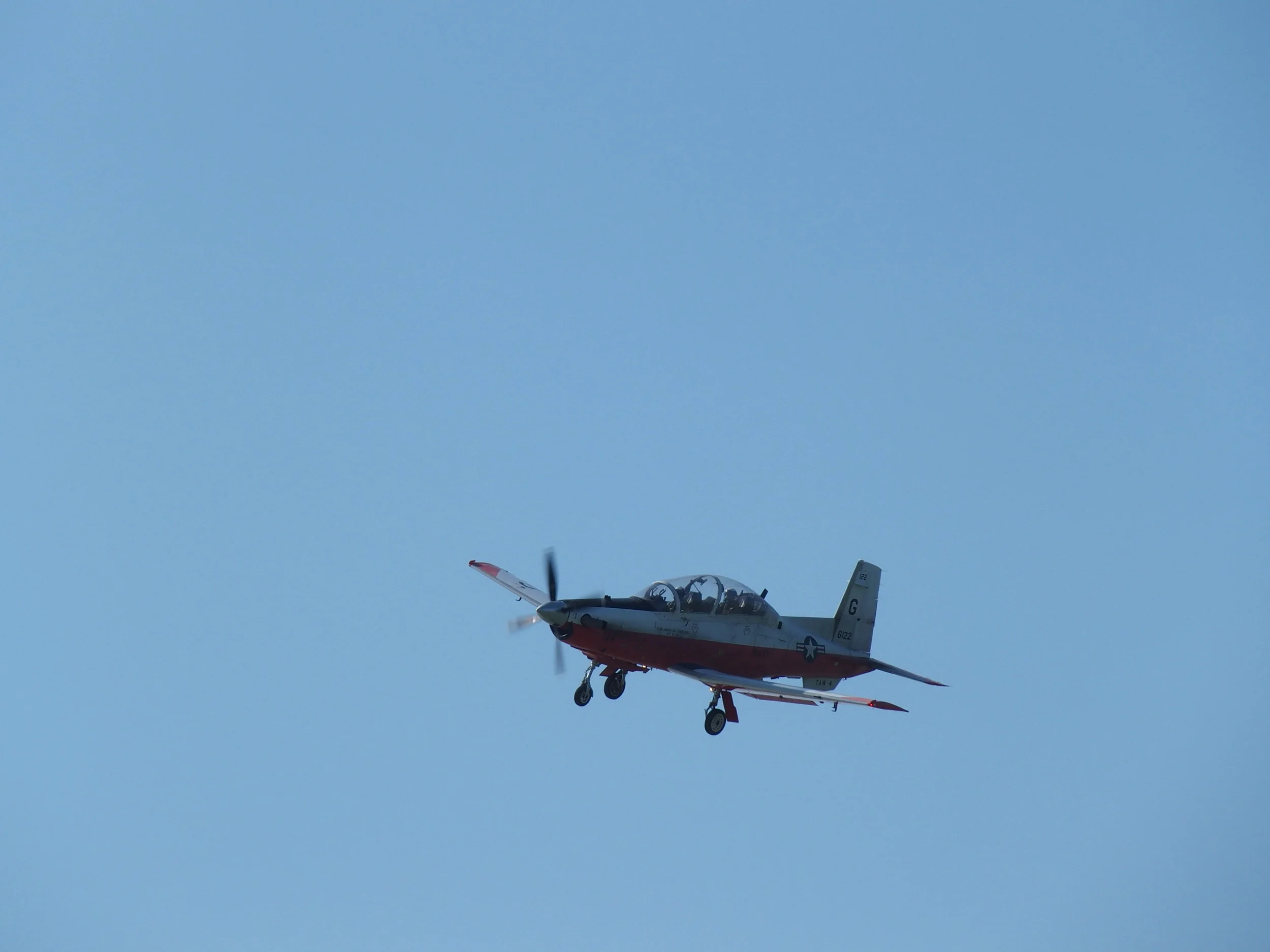
But all we found flightworthy was this.
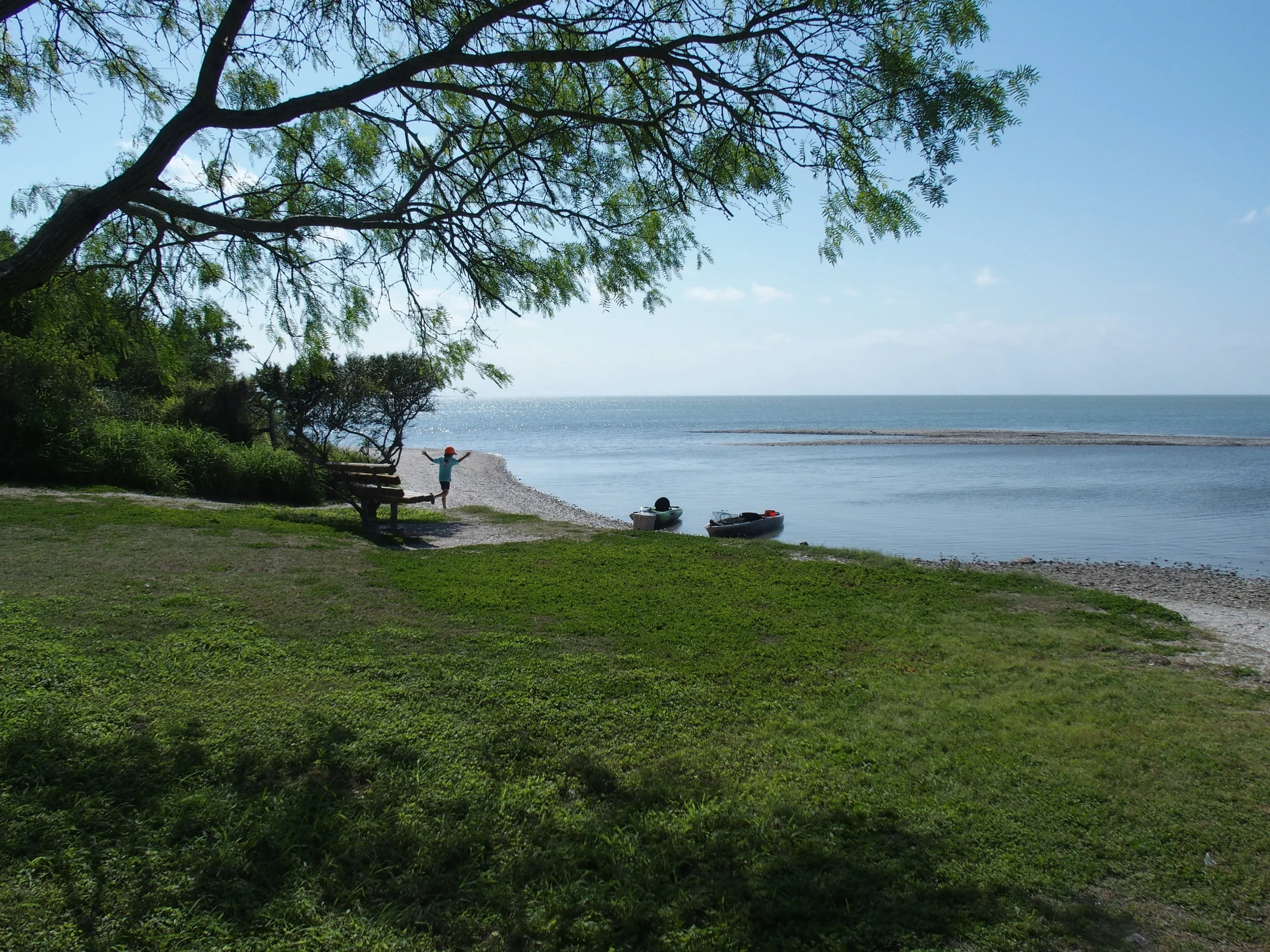
A nice little park on Copano Bay, by the airport.
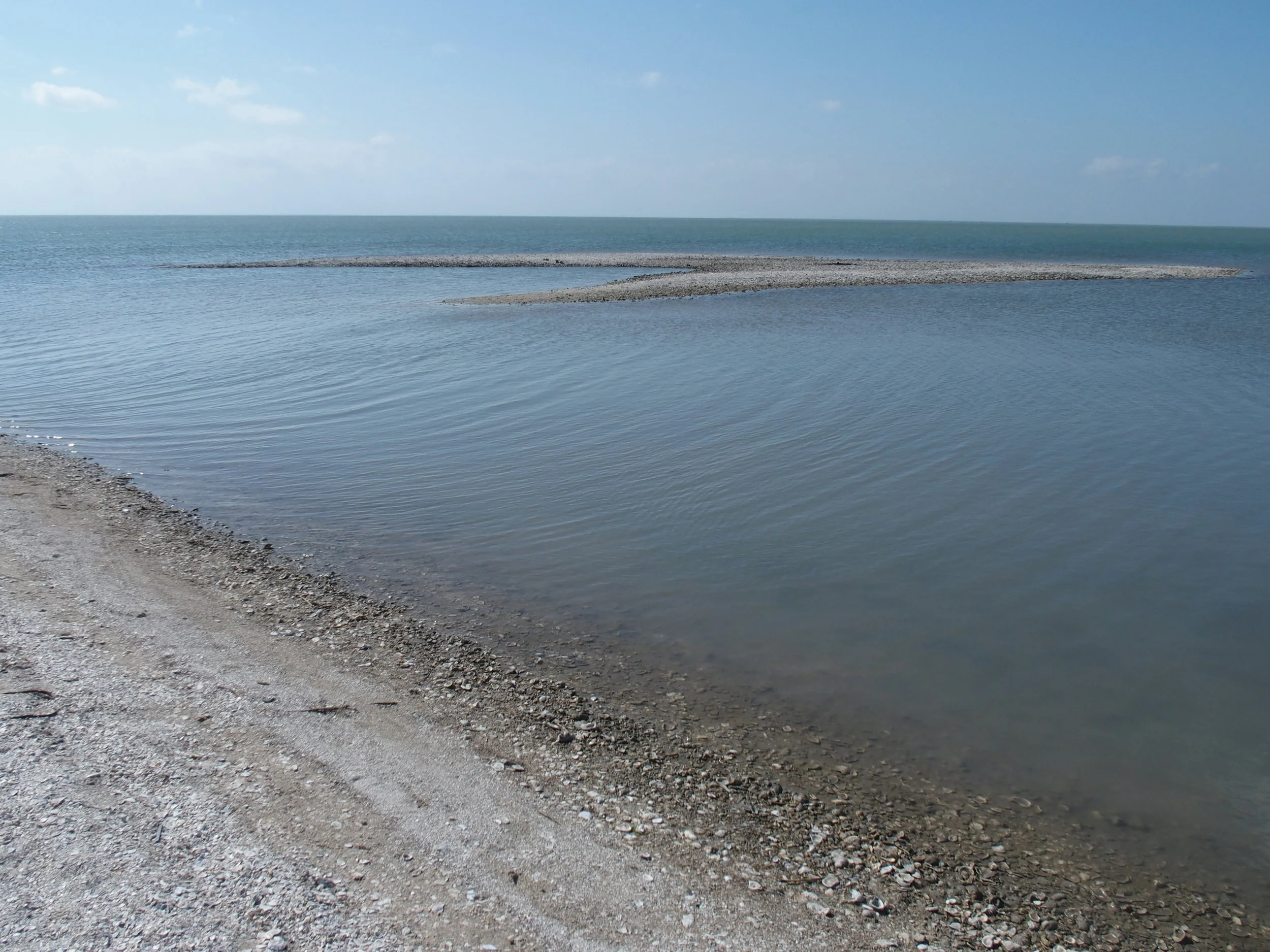
Copano Bay.
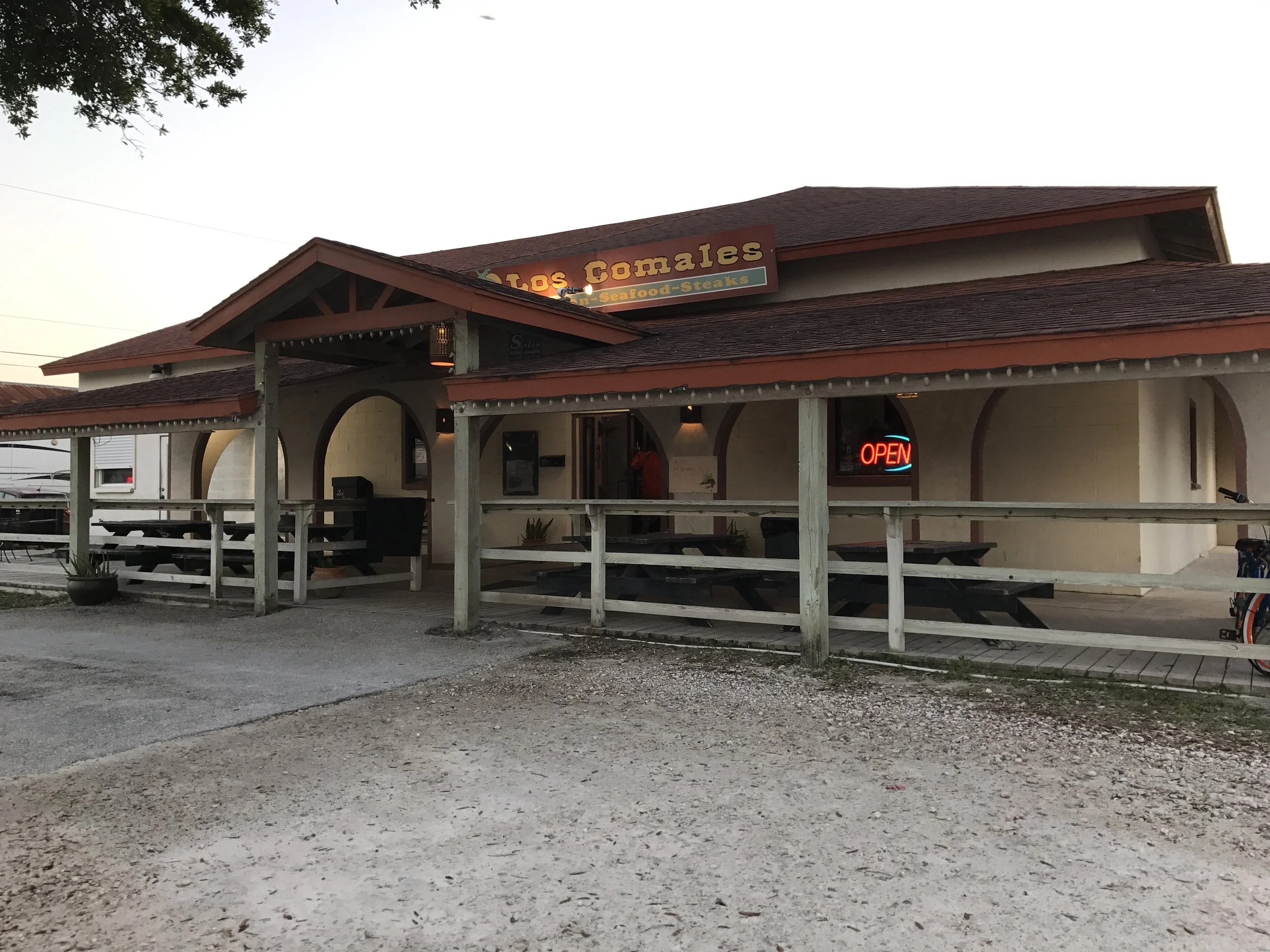
And then Los Comales for dinner. Yum.
... whistling ducks, kiskadee, etc.

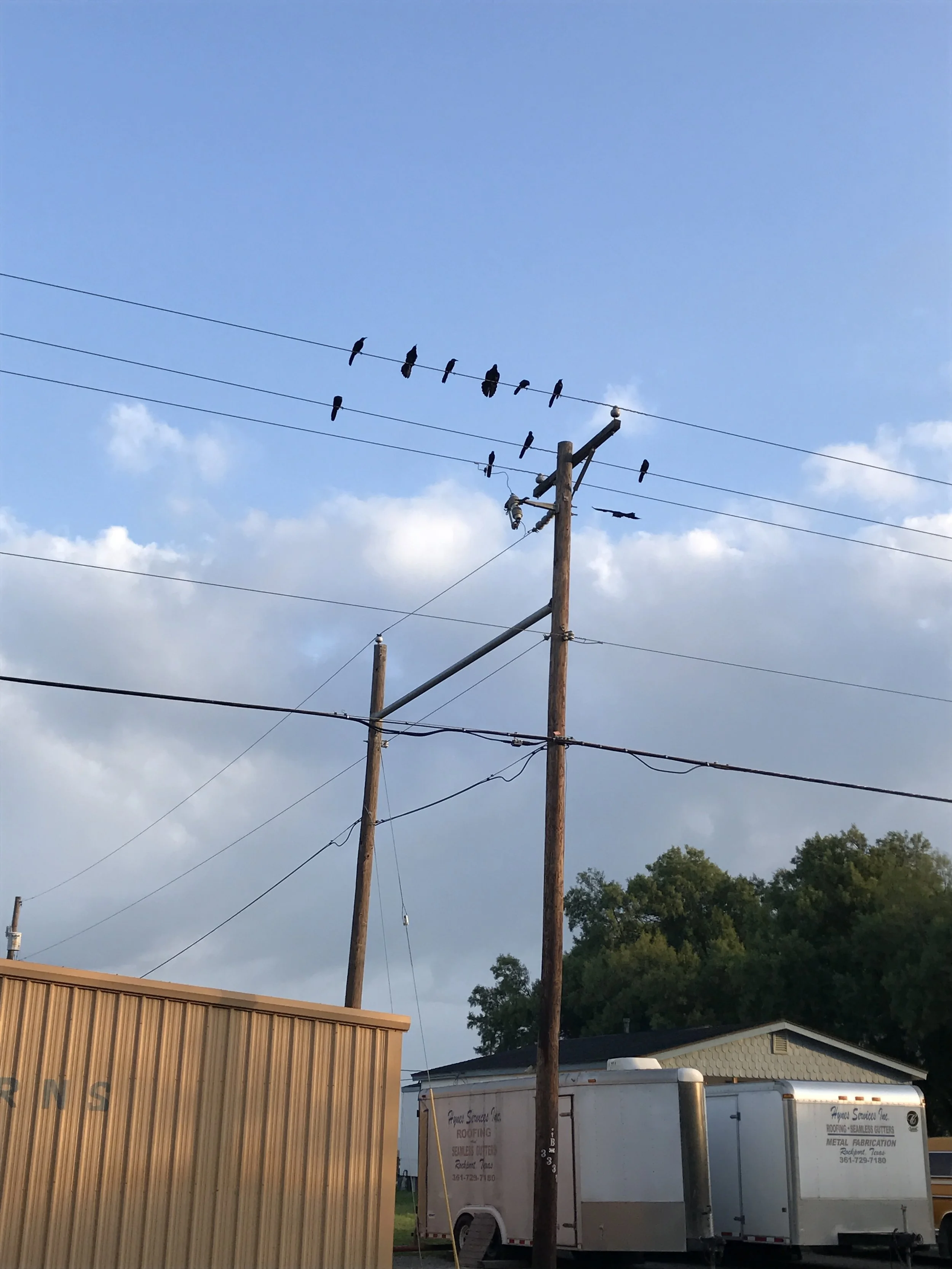
Boat-tailed grackles, which his and seem to spit when perturbed.
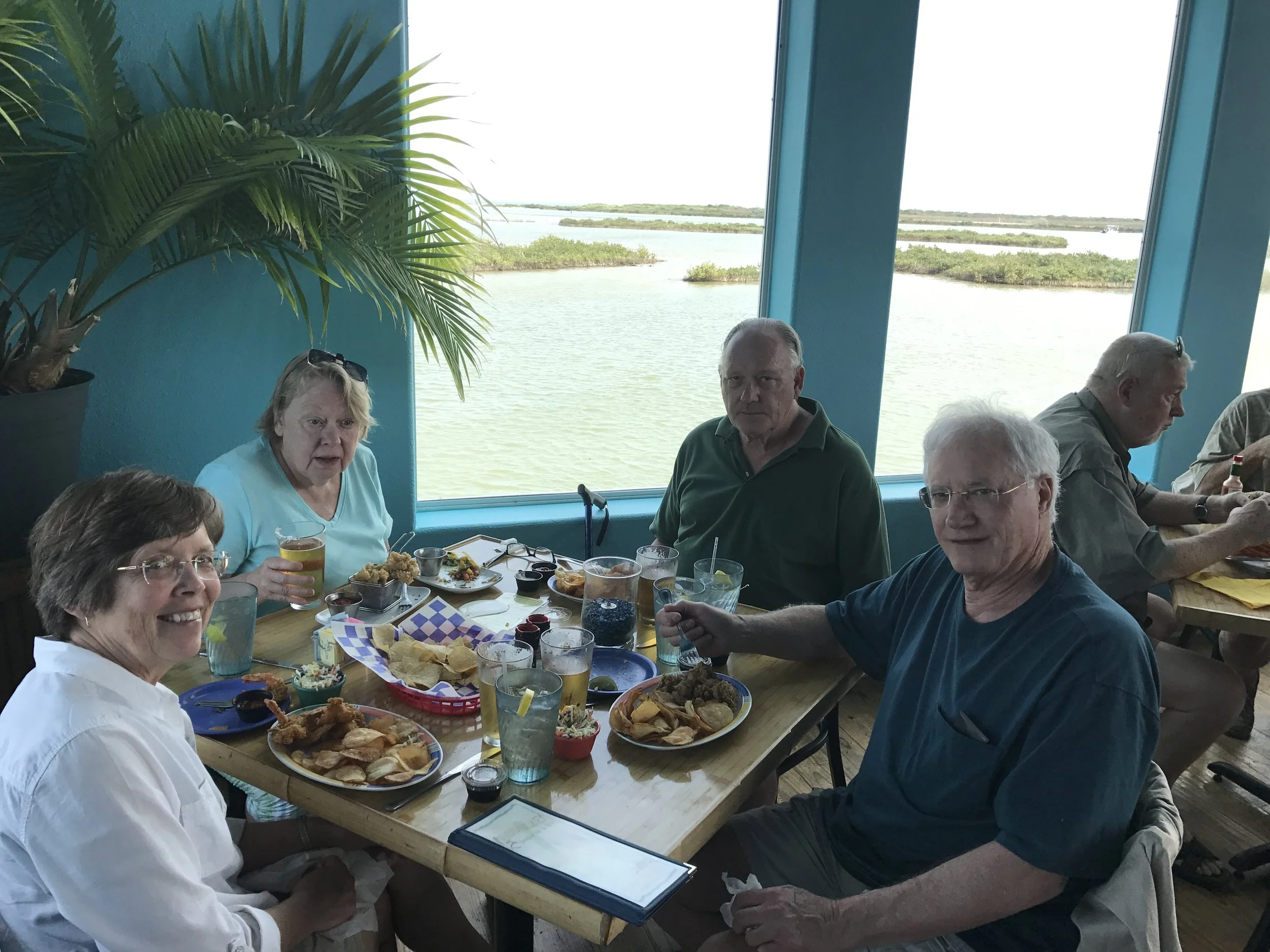
Lunch (oysters, shrimp, etc) in paradise—Paradise Key Dockside Bar and Grill.
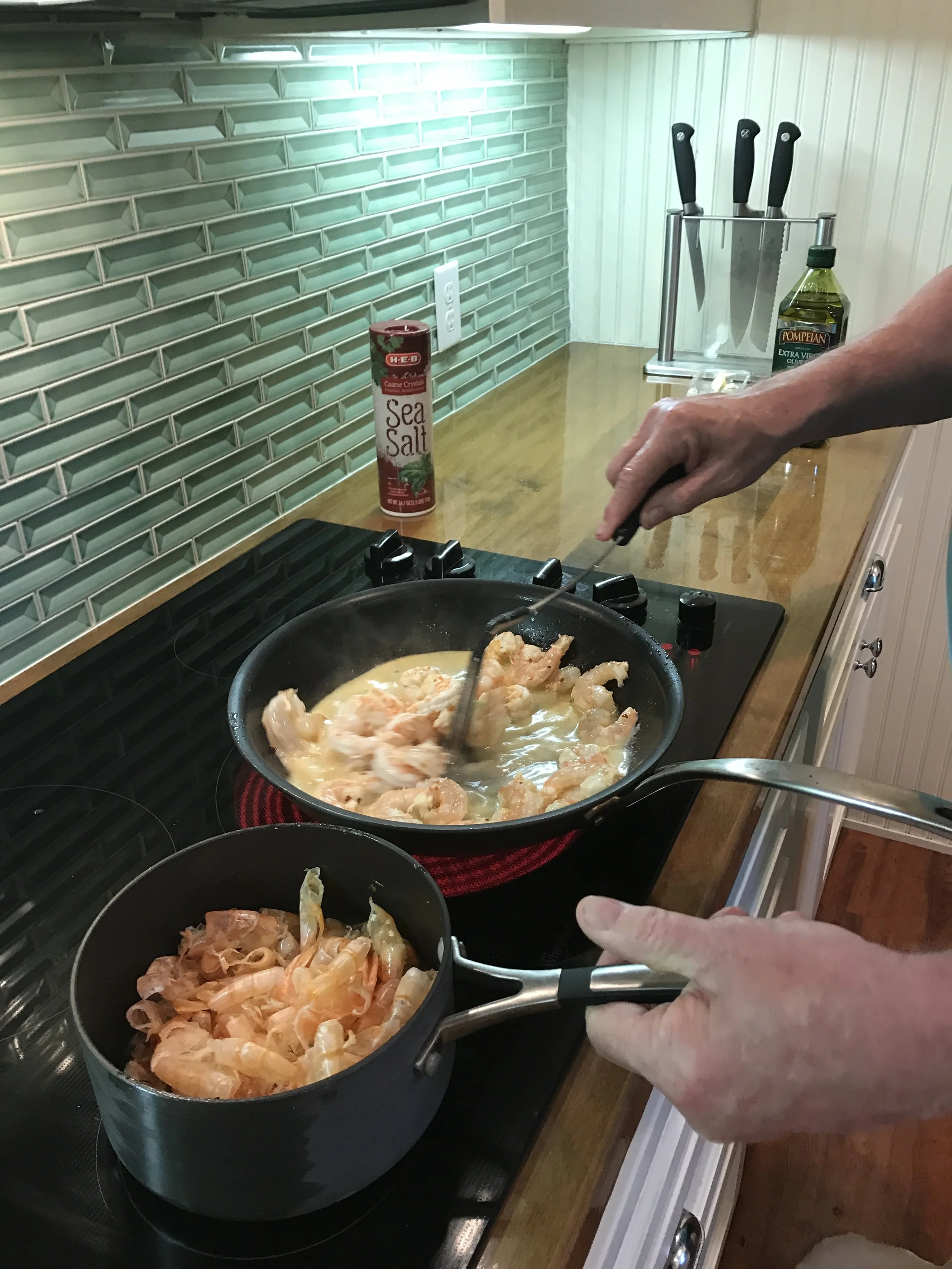
Shorts and t-shirt weather, and even then shade felt good. Nice way to segue out of winter. Shopping, walking, bike riding, shrimp for dinner, basketball. Had to spray all the salt and road grime off my bike but after that bike riding was great—going one direction. (Almost impossible the other way.)

On a different note, Bri has provided links to a couple of videos of the recent Nite nationals.
Here's one:
And here is another:
...we would take an airplane.
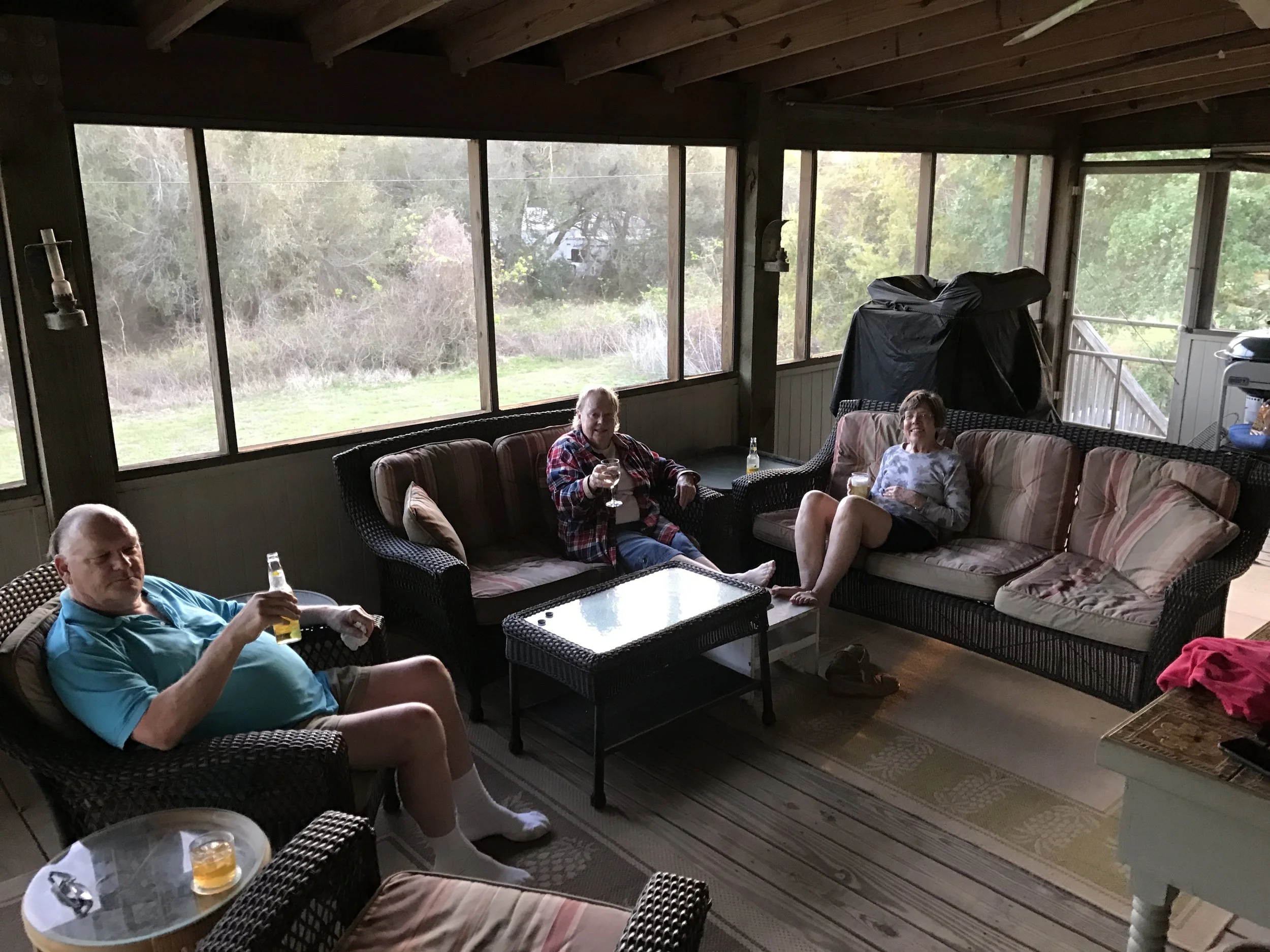
Long drive. Not fun but we got it done. Now for some relaxing.
Big day in Little Rock.
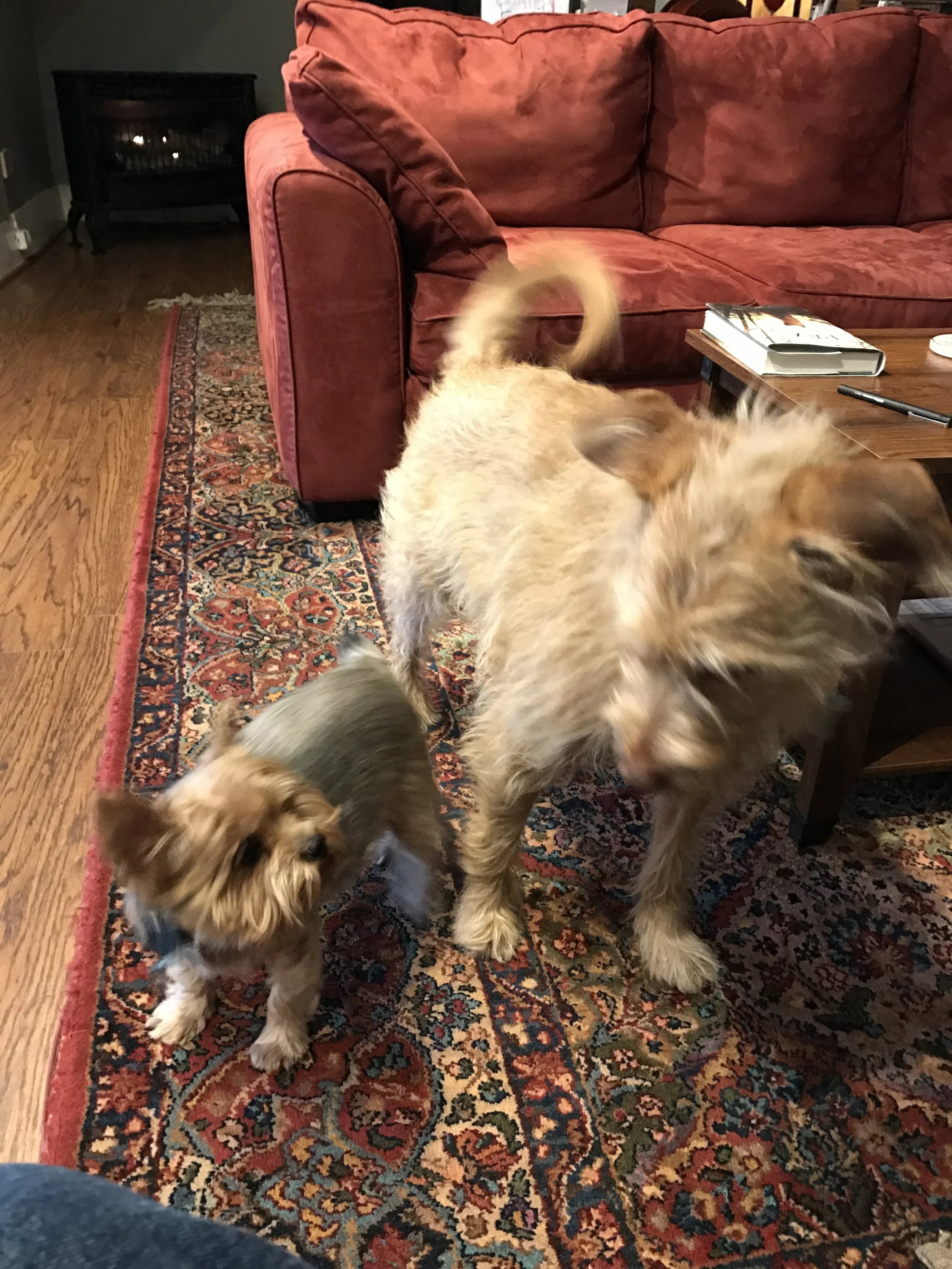
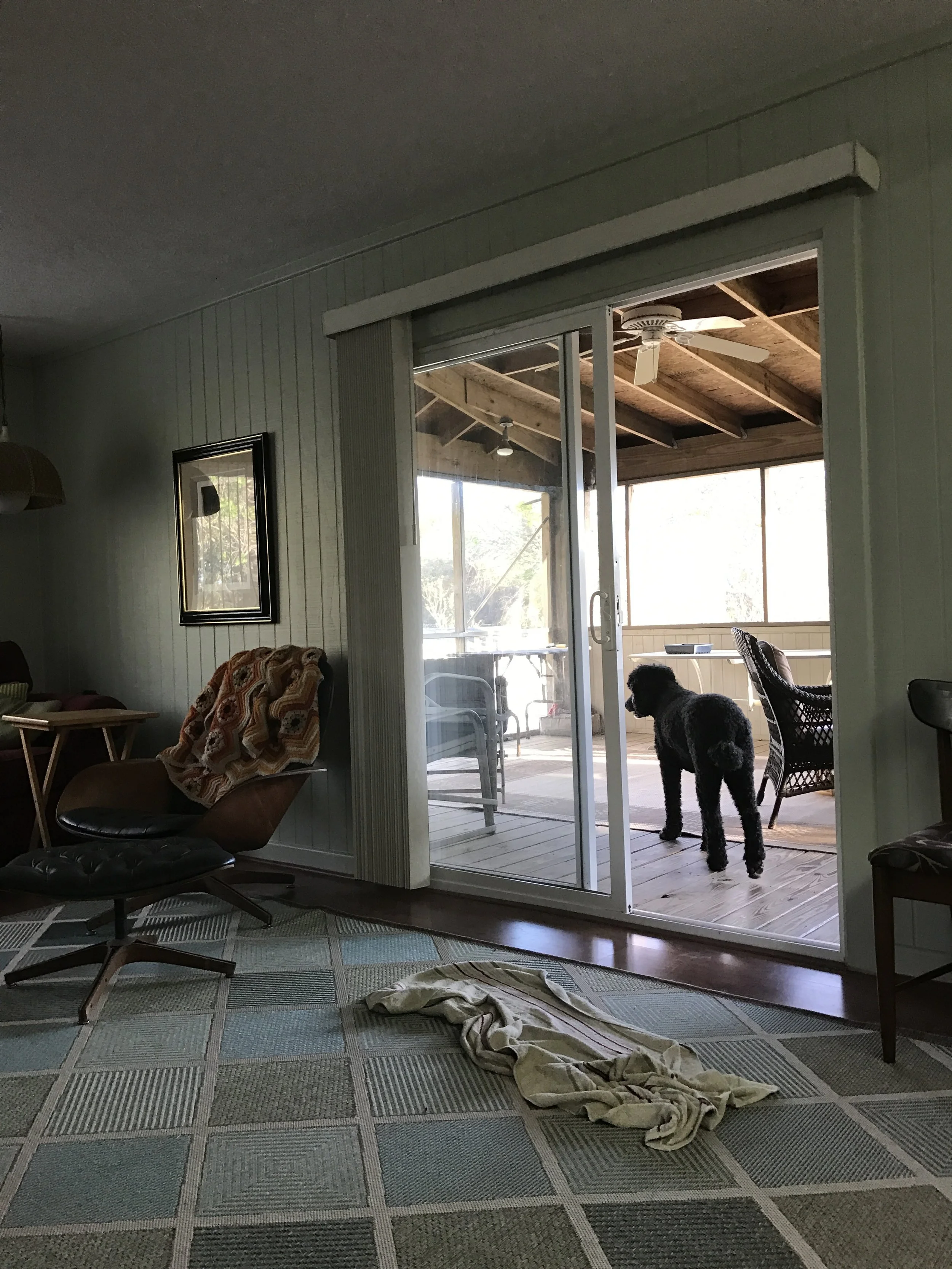
Bear uses the dog door into our place to visit from time to time. (NB: This is the same rug we have in whitewater, only much nicer.)

A bit of downtown Little Rock, which really is quite a small town.

The big line waiting to order at the Flying Fish in downtown LR.
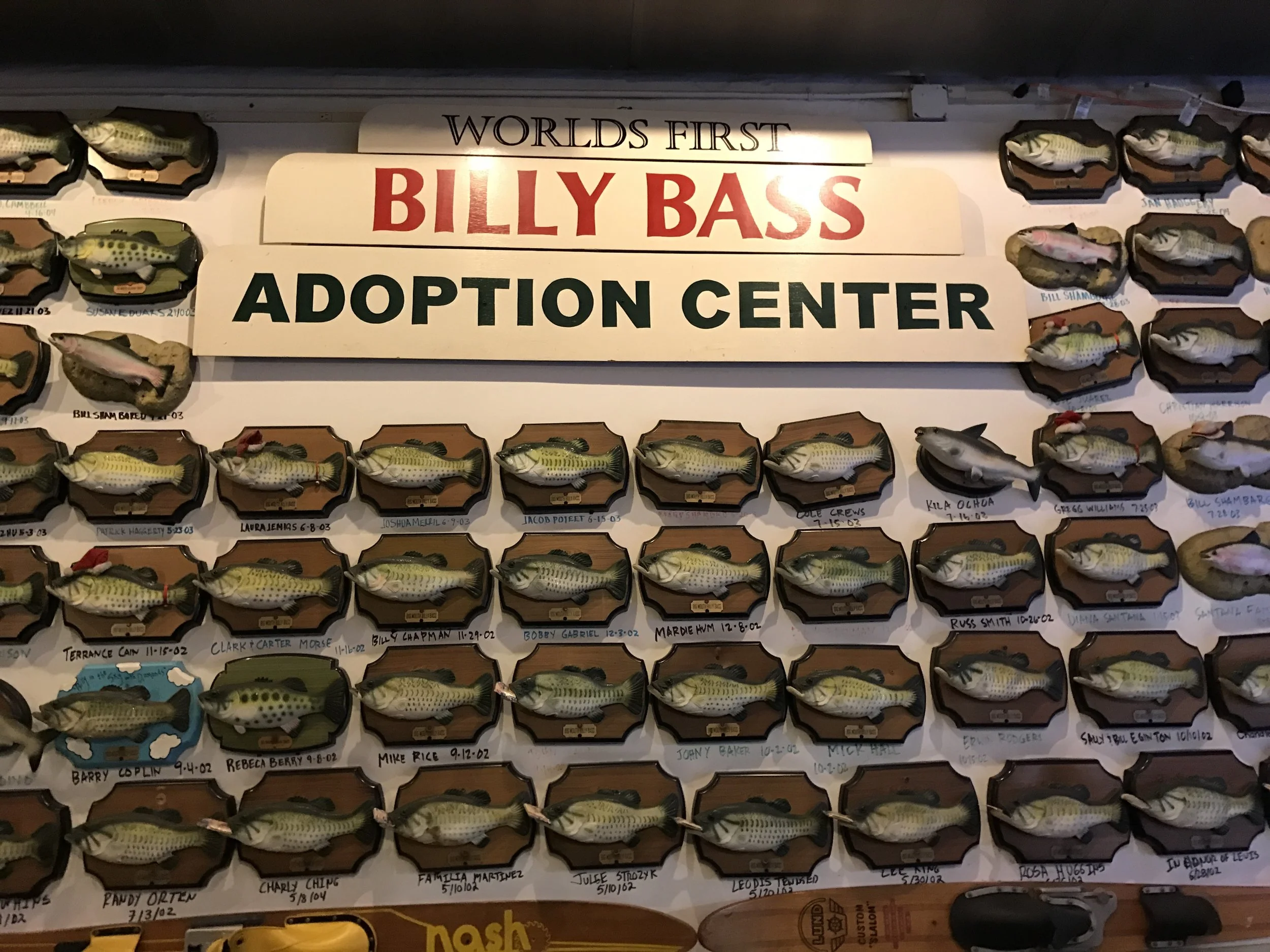
The restaurant's wall is covered with trophies, including these.
Late breakfast at Roots, a funky but fabulous pace just a block from here. Line out the door when we arrived and still there when we left an hour later.
A long walk around the neighborhood (the historic Governor's Mansion neighborhood), mostly built in the 1880s and now transitioning from run down to rehabilitated, maybe even gentrified someday. At the convenience store at the corner of Broadway and Spring Street a long, animated, discursive conversation with Amexem Alumuur (of Morian Temple Services) about ethnicity, evolution, and human origins. We both had a good time.
A short drive and then a good walk along the west bank of the Arkansas River (Murray Park). And then dinner at the Flying Fish, downtown (10 minute drive) of catfish and shrimp. Once again a long line—the place somewhat reminiscent of Snoopy's south of Corpus Christie on Mustang Island.
And, sometime during the day we came to the realization that we are just one block away from the place we stayed at on our way home last year. Duh. (Our current place is much nicer.)
Rode a chilly north wind south. Six inches of snow and 12 degrees when we left Whitewater. Snow showers, sometimes heavy, until well south of St Louis. Only 40 WJJDegrees in Little Rock, although the trees have leaved out and the azaleas are starting to bloom.
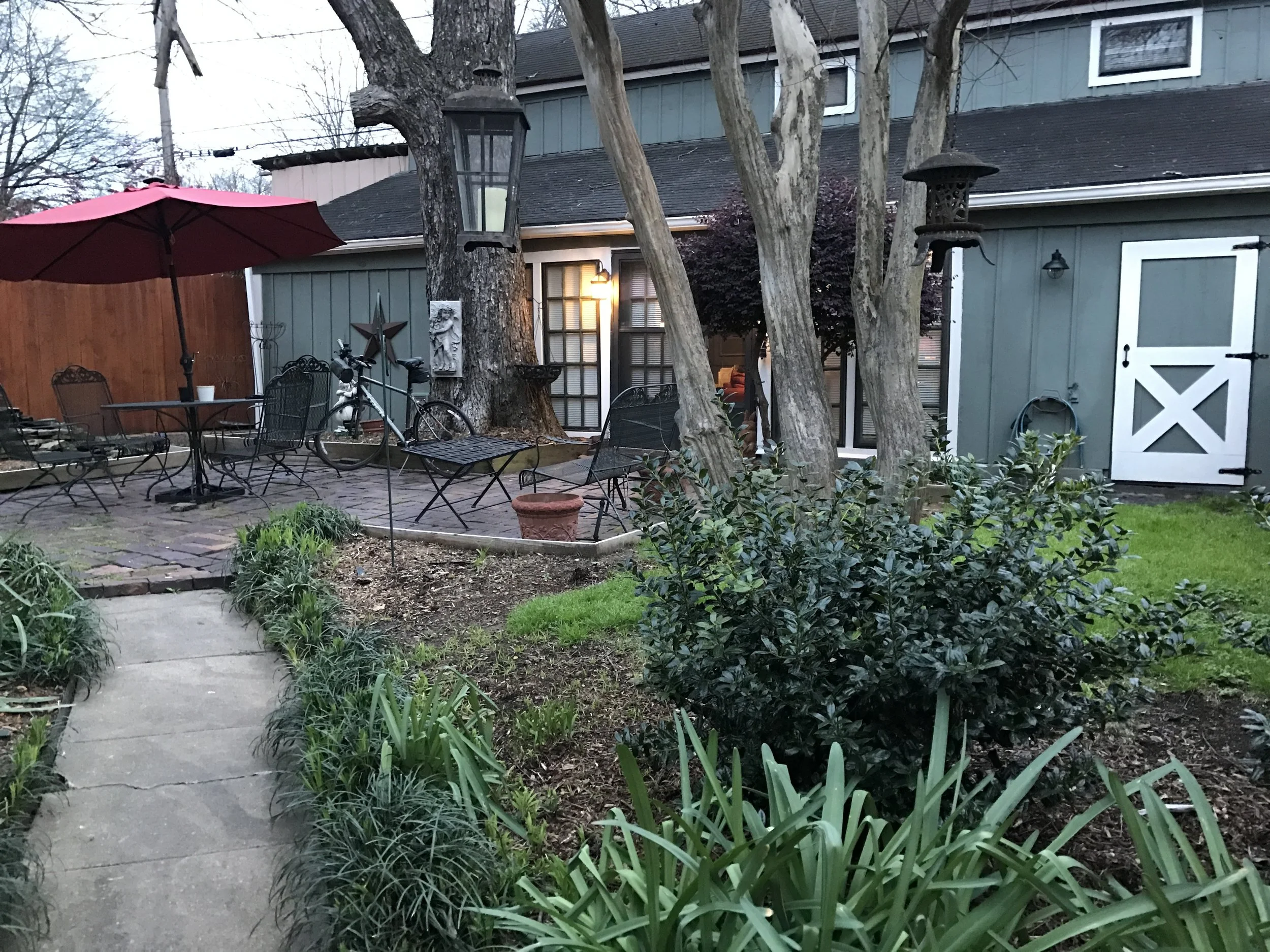
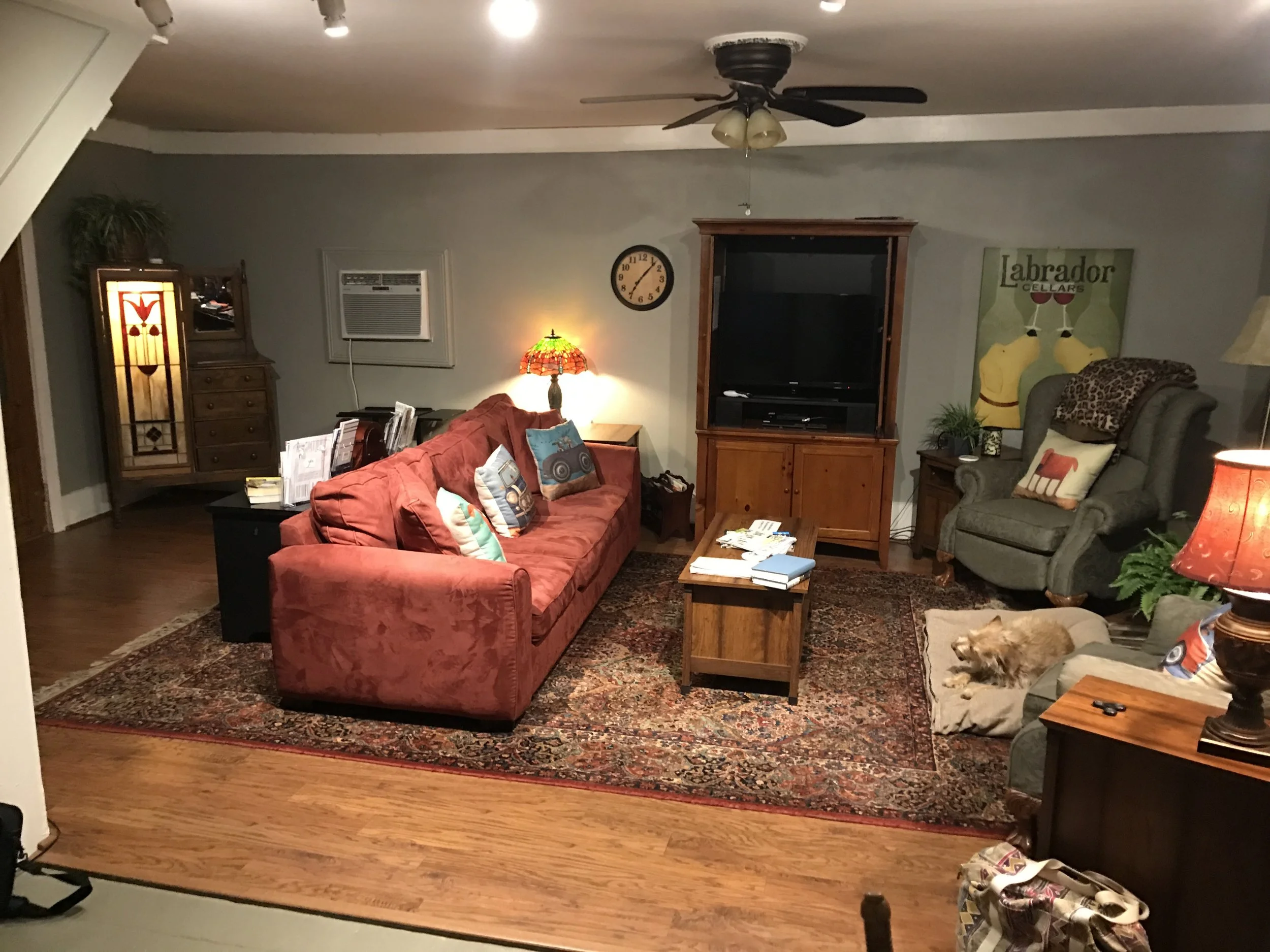
Now ensconced in an 1882 carriage house in old Little Rock. A remarkably nice place—spacious, well appointed, lots of comfortable furniture, two bedrooms, two baths, a well stocked kitchen, and a big fenced-in garden-yard where Pax and Bear (a cute Yorkie) can pal around.
Getting set to hightail It south.
Pax is already keeping a close eye on all the exits.
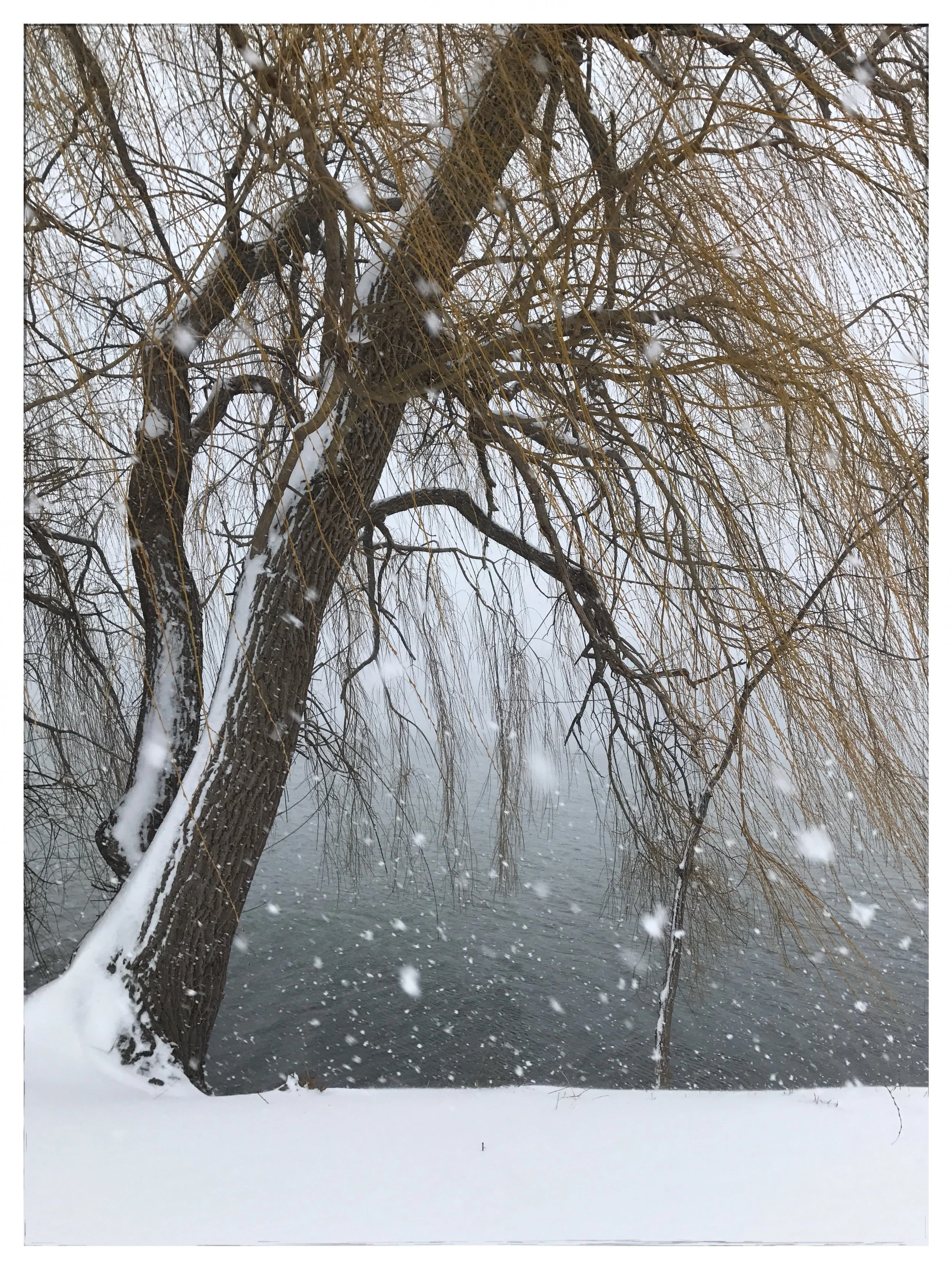
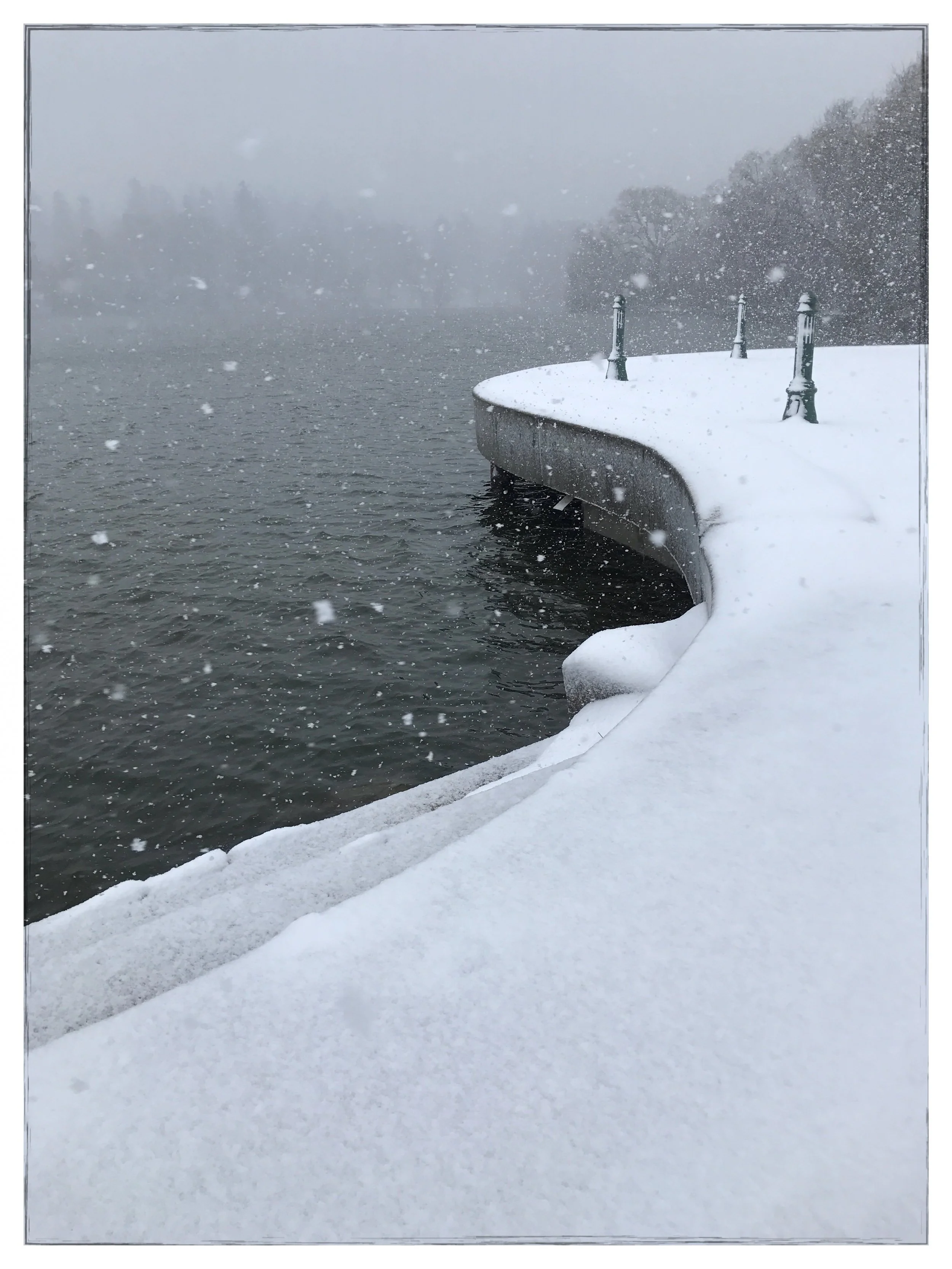
Six-thirty and there's still plenty of light? Yes, we have sprung ahead, but the sky has clouded over and an east wind has come up, still carrying the recent chill. All that adds up to a Winter Weather Advisory—possibly seven or more inches of snow overnight and into tomorrow.
While we have light, we don't quite actually have spring. This is the kind of March I remember—the kind of March when southern locales beckon.
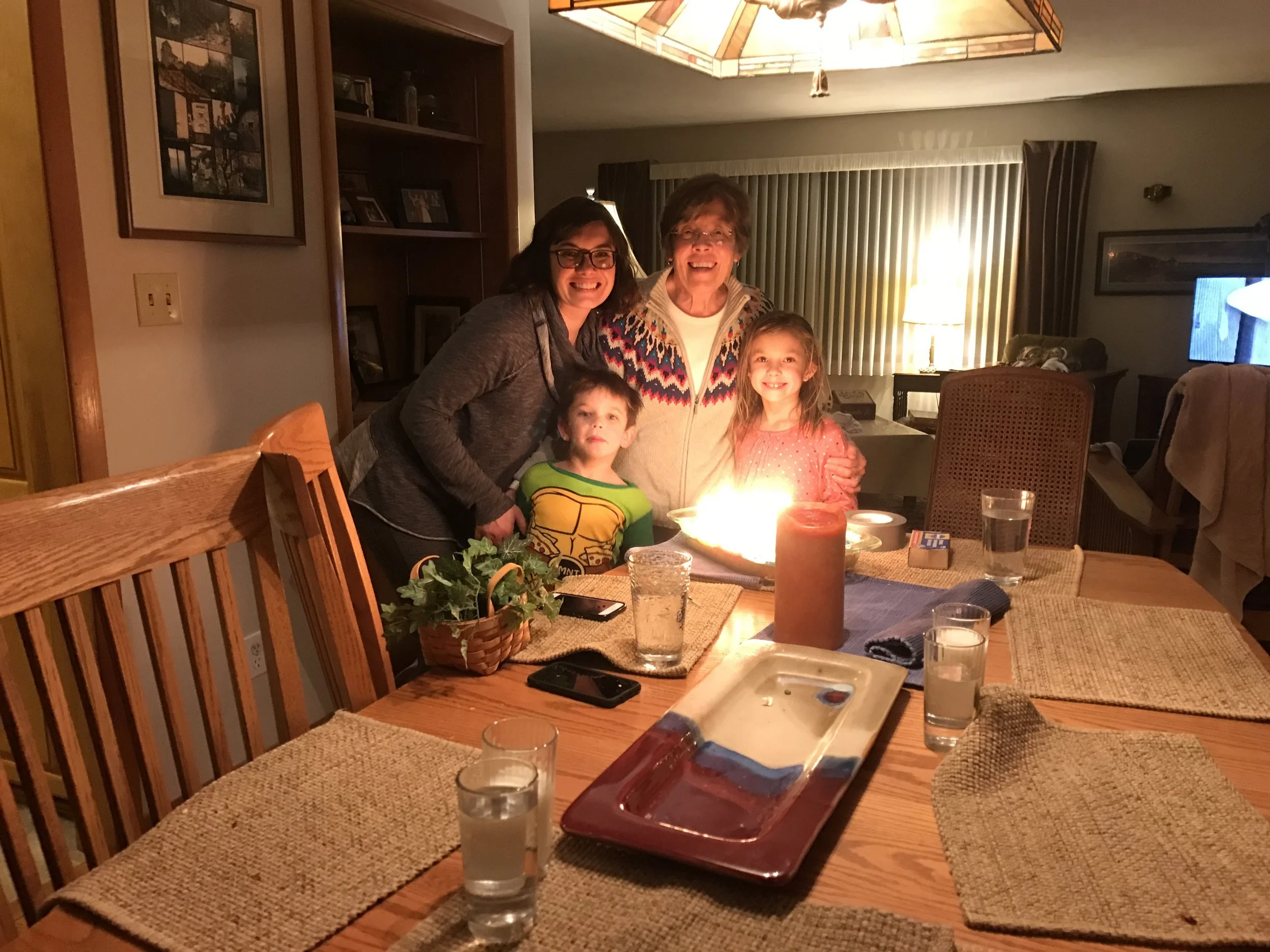
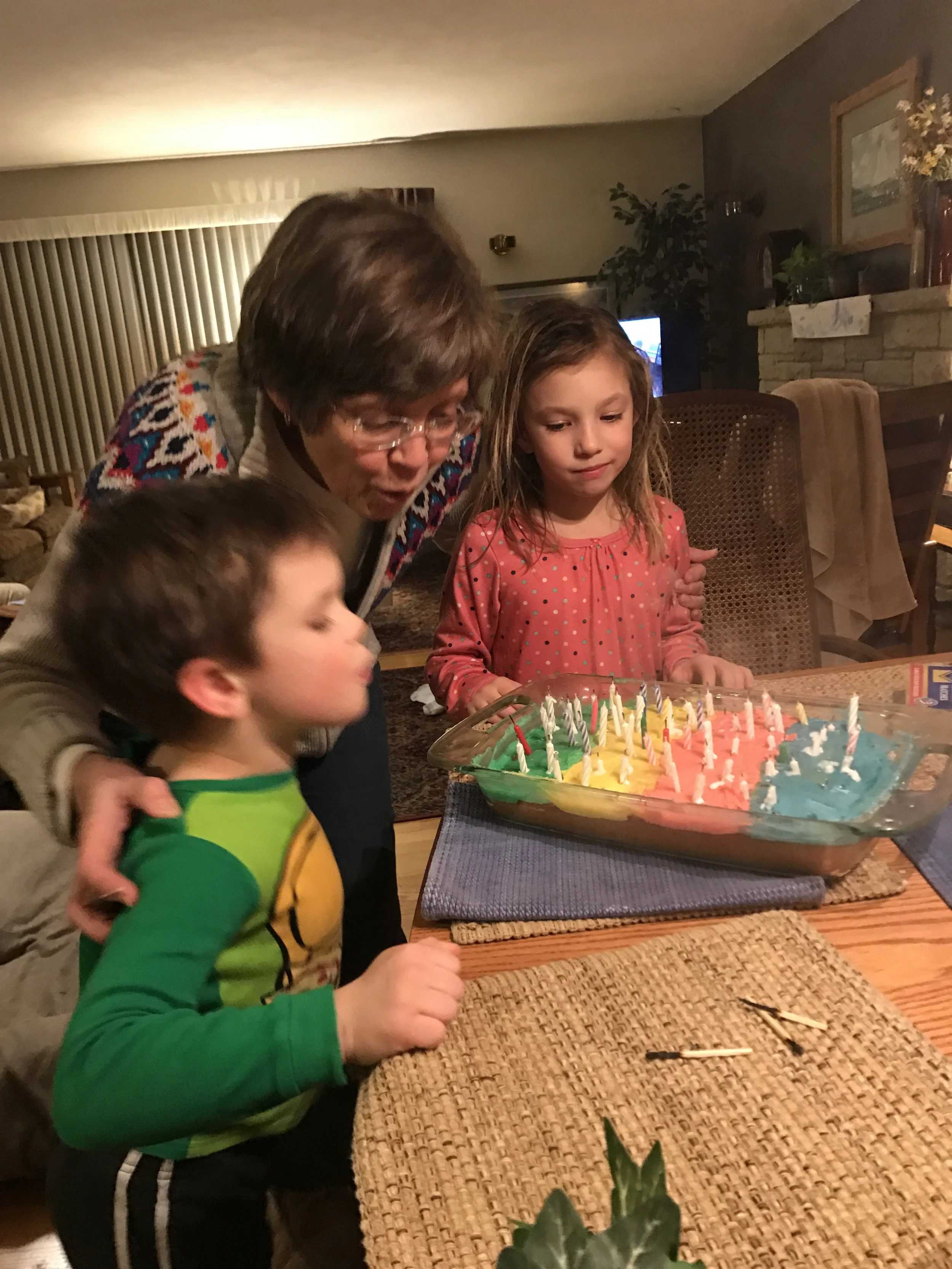
However, Bri and Tony had a great time at the Nite national regatta in Escanaba, where they acquitted themselves well. (more imagery later).
Qwerty
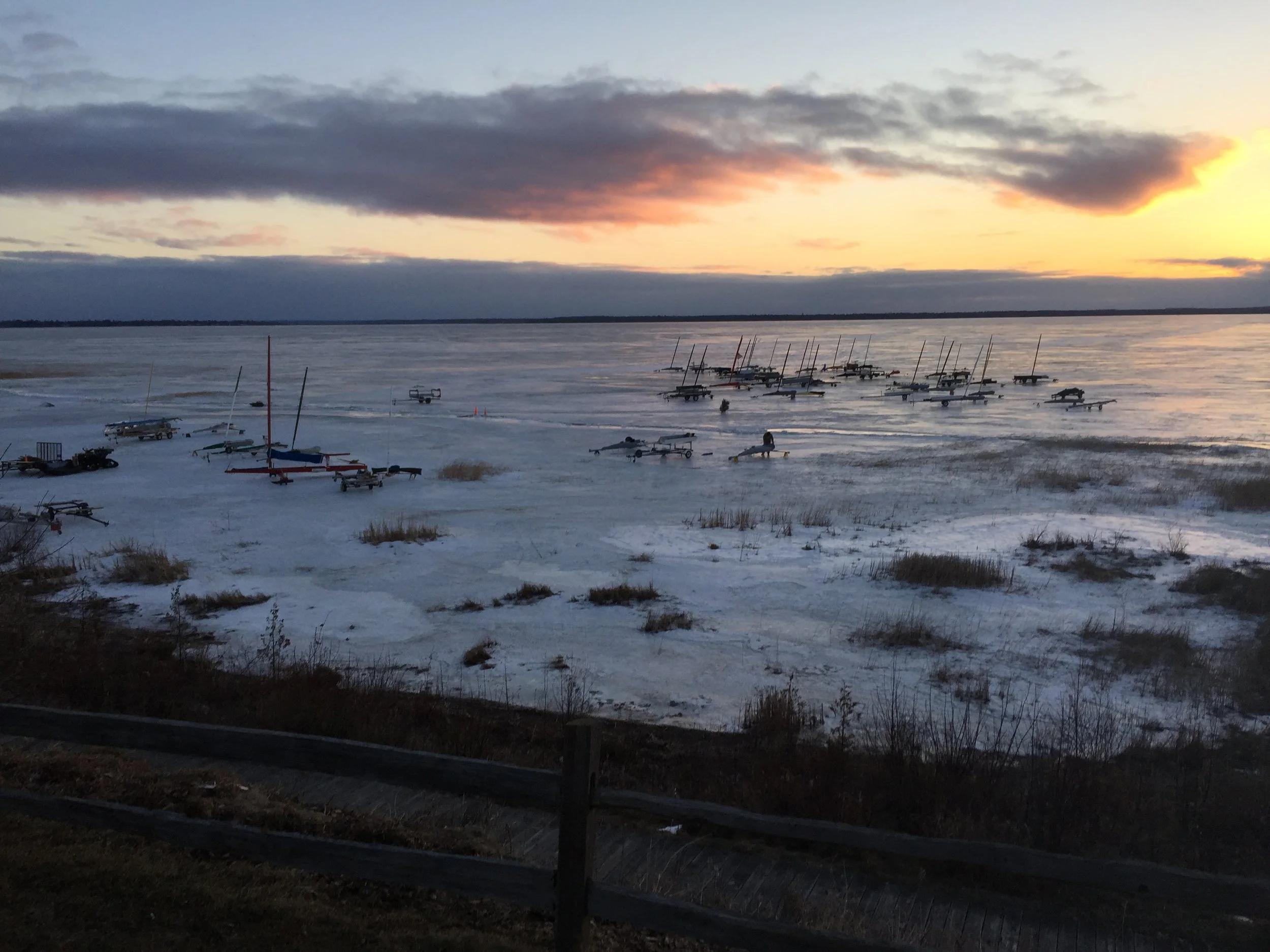
Bri and Tony at the Nite national regatta on Little Bay De Noc off Gladstone, Michigan. Thirty-five boats. The guys will not win hardware, but they are doing well and having fun. Cold and windy there today—and here, too.
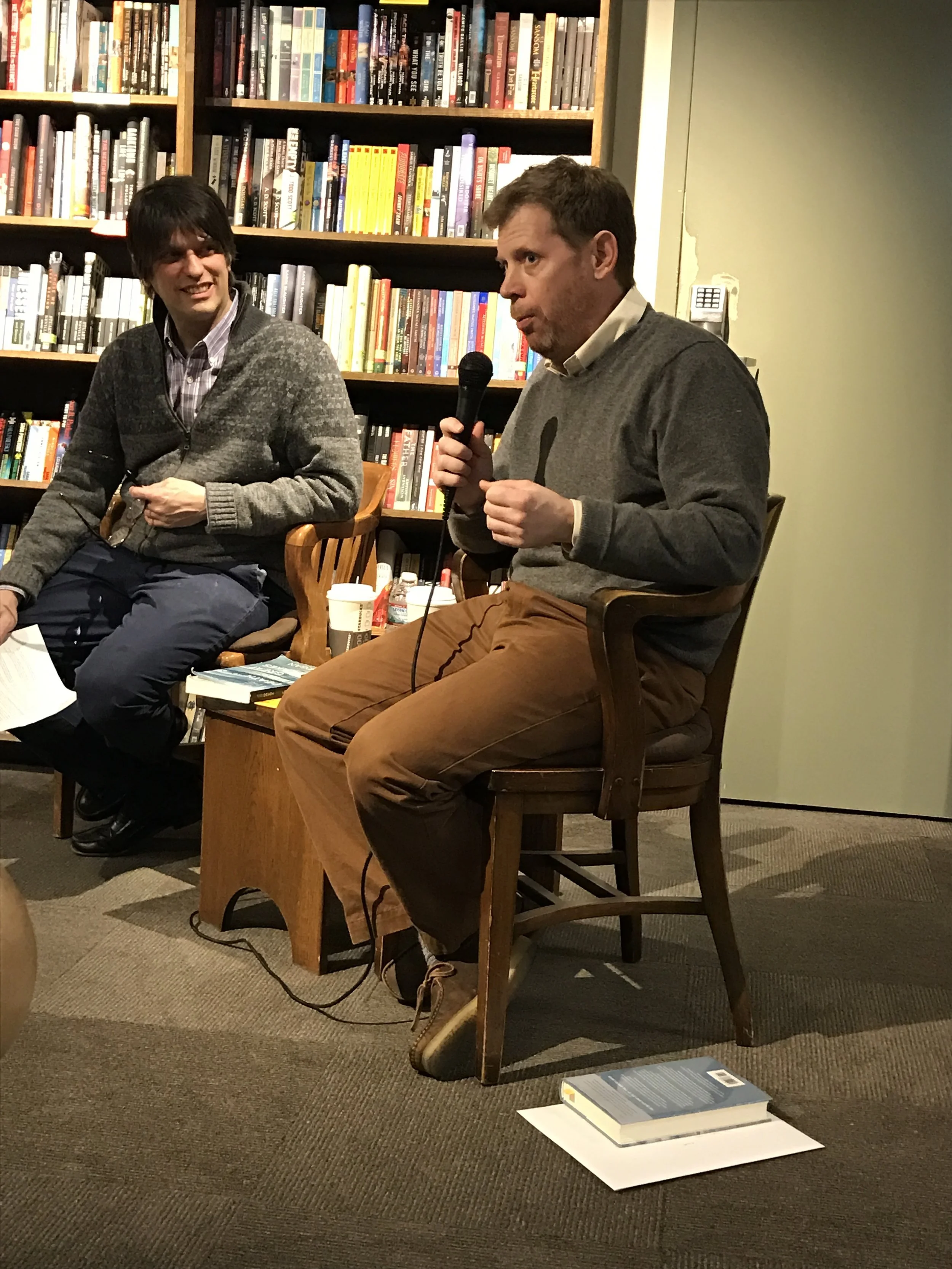
Brief stop at Fox Point, then with Ab, Kate, and Will on to a tacquira on Milwaukee's north side. After dinner Mimi and I trekked another block south to Boswell Book Company where Dan Egan was speaking about his just released book The Death and Life of the Great Lakes. Overflow crowd, suggesting the Great Lakes are a topic of wide iterest.

Almost calm.
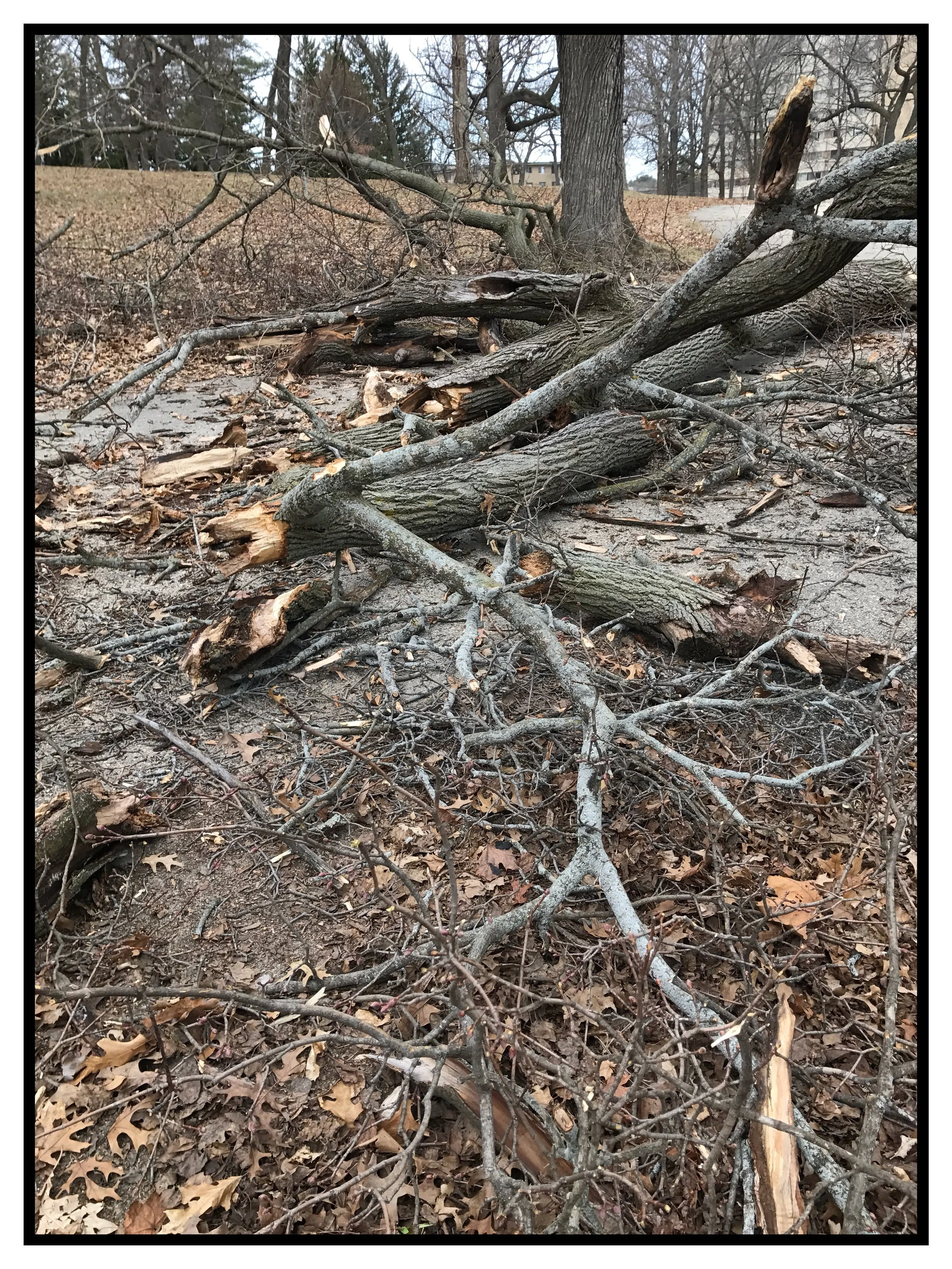
This is where we didn't walk yesterday—our normal route through the park.

And here is where we walked today. Last time here the prairie was shoulder high. Now ashes. Quite sure it was not burned during the gale.
Pax had his annual checkup today, in preparation for travel south. He is in perfect health, weighs a half pound less than last year (hard to believe), and according to two Veterinary Technicians and one Veterinarian, just about the best all-around dog they have ever met. I agree.
Just trying to keep from blowing away. Gusts to 60 mph, almost enough to sweep a two-footed walker off his feet. Four-foot, however, just thought it was a blast and was cranked.
Lots of tree pruning going on—and something unimaginable happening out on the big lakes.
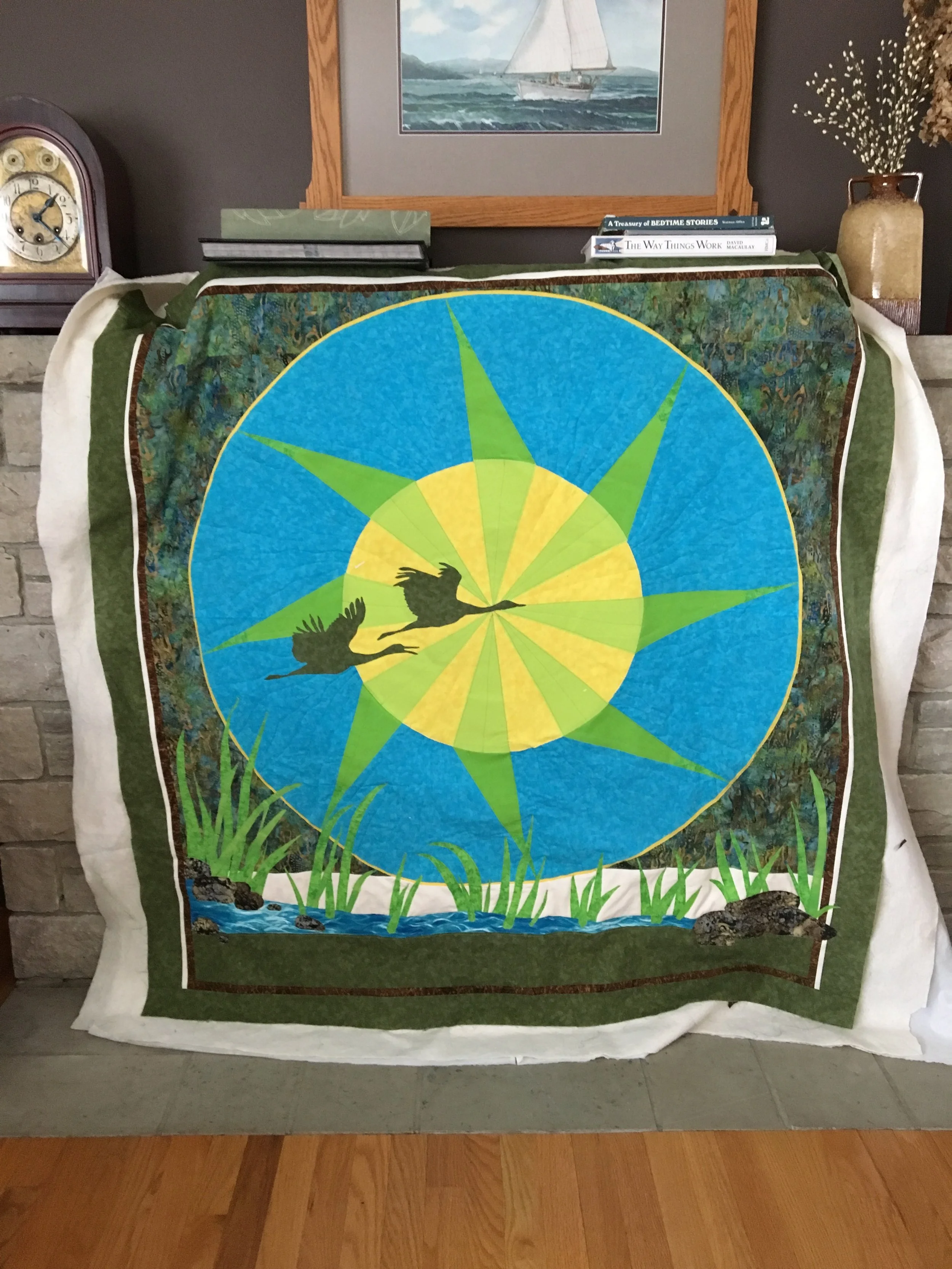
Closer to home, the big, two-sided tapestry that will hang between posts on the upper level of Kagawong house as an acoustic aid, is coming together...
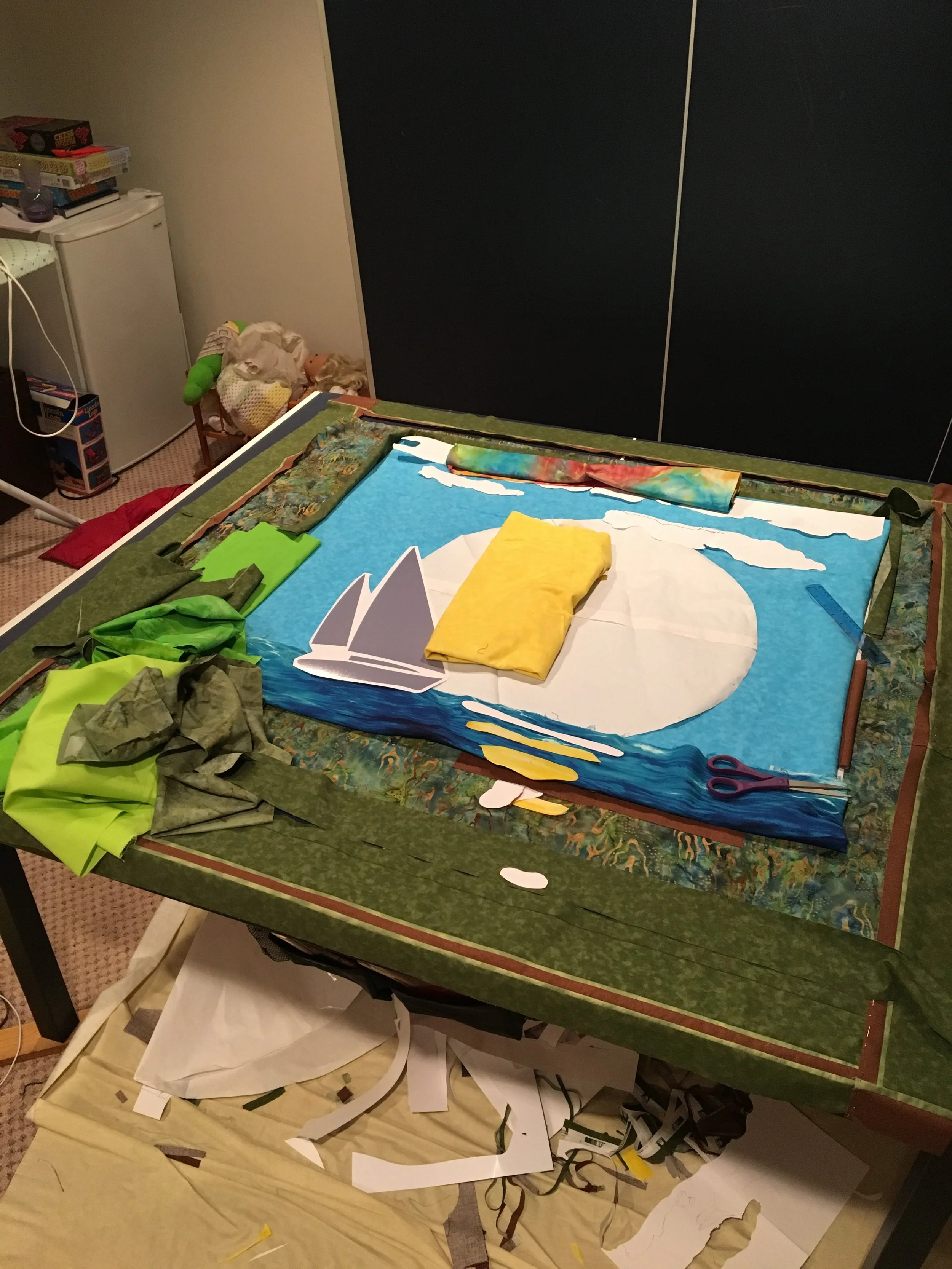
...and looking good. What a vast amount of work, except, supposedly, it's fun.
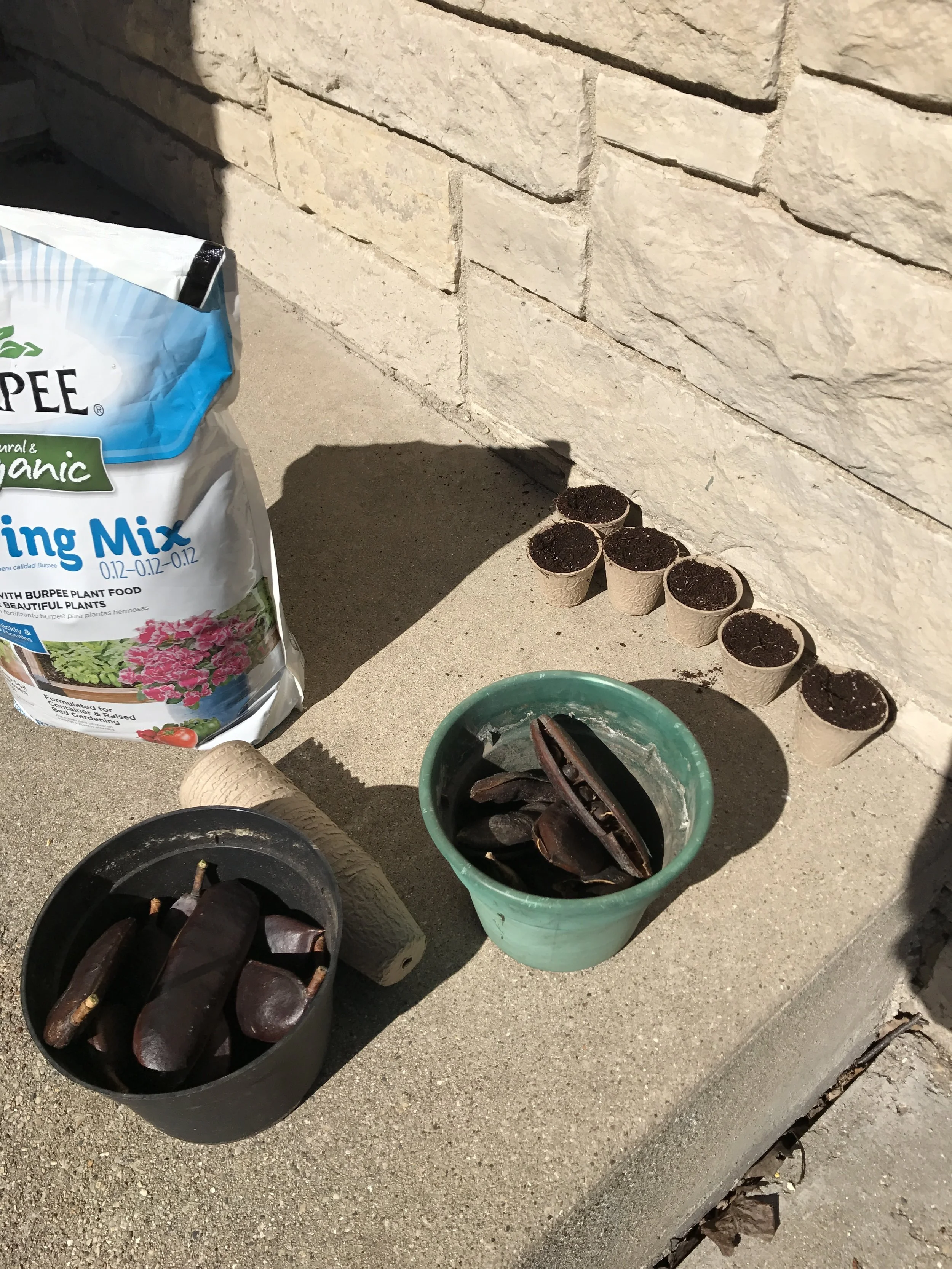
Meanwhile, I've started a Kentucky Coffee Tree tree farm. (It is one of my favorite trees.) Thanks to the wind quite a few pods were dislodged today from the mother tree over in Starin Park.
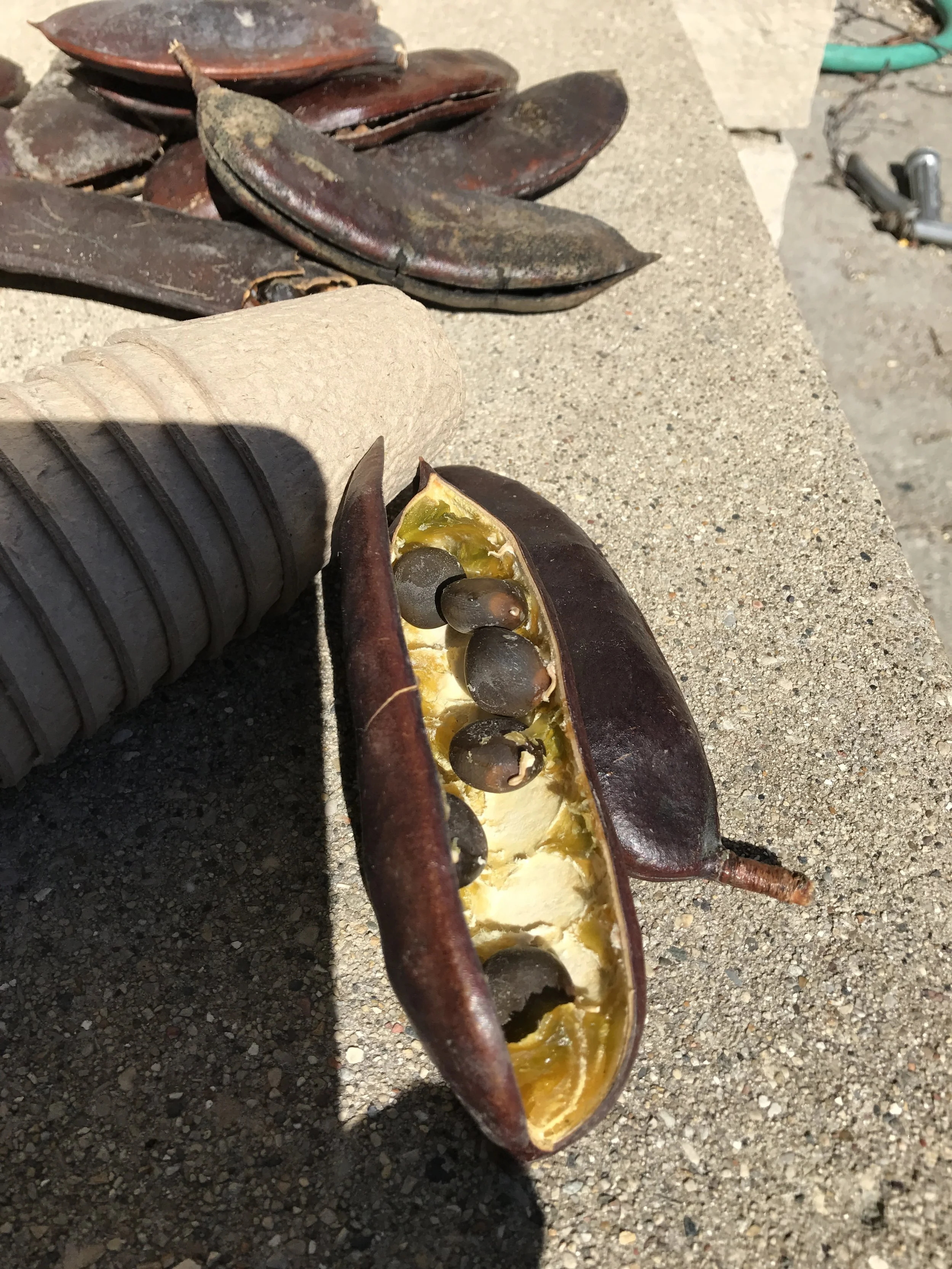
The pods are tough, woody, and filled with a gooey jelly, which is somewhat toxic. The multituidinous, ravenous squirrels hereabouts clearly leave them alone.
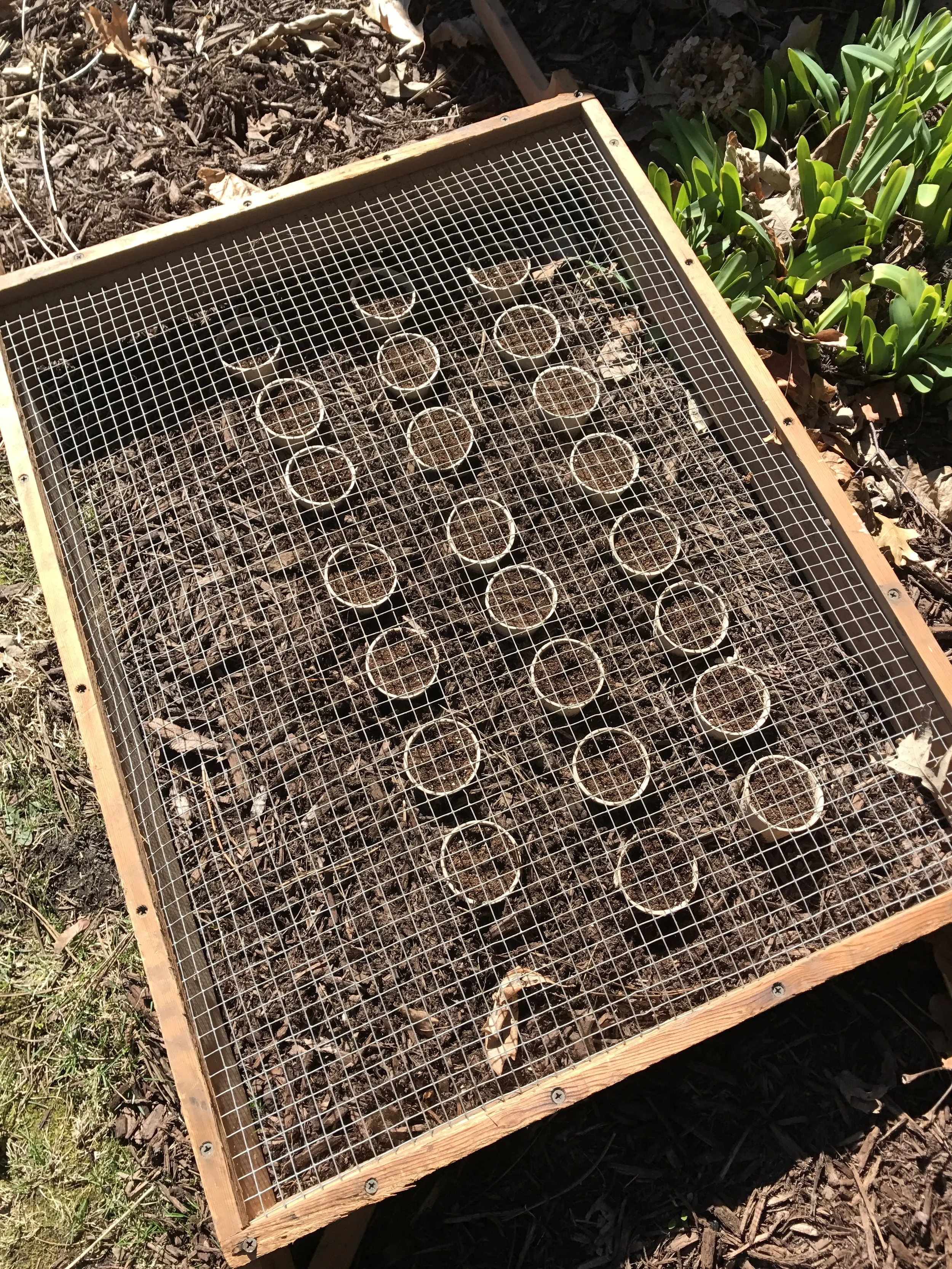
I think the Kentucky Coffee Tree, with its rough bark, twisted branching habit, and alternate, binately compound leaves is unusually handsome.
~~~~~~~~~
From Wikipedia:
The Kentucky coffeetree is believed to be an example of evolutionary anachronism. The tough, leathery seed pods are too difficult for many animals to chew through (in addition to being poisonous) and they are too heavy for either wind or water dispersal. It is thus believed that the tree would have been browsed upon by now-extinct mammoths and mastodons which ate the pods and nicked the seeds with their large teeth, aiding in germination. This behavior is seen among African elephants eating Fabaceae relatives in Africa. Because of this, its prehistoric range may have been much larger than it has been in historical times. Today, in the wild, it only grows well in wetlands, and it is thought that only in such wet conditions can the seed pods rot away to allow germination in the absence of large herbivores.
Let me know if you would like a tree or two.
...roaring.
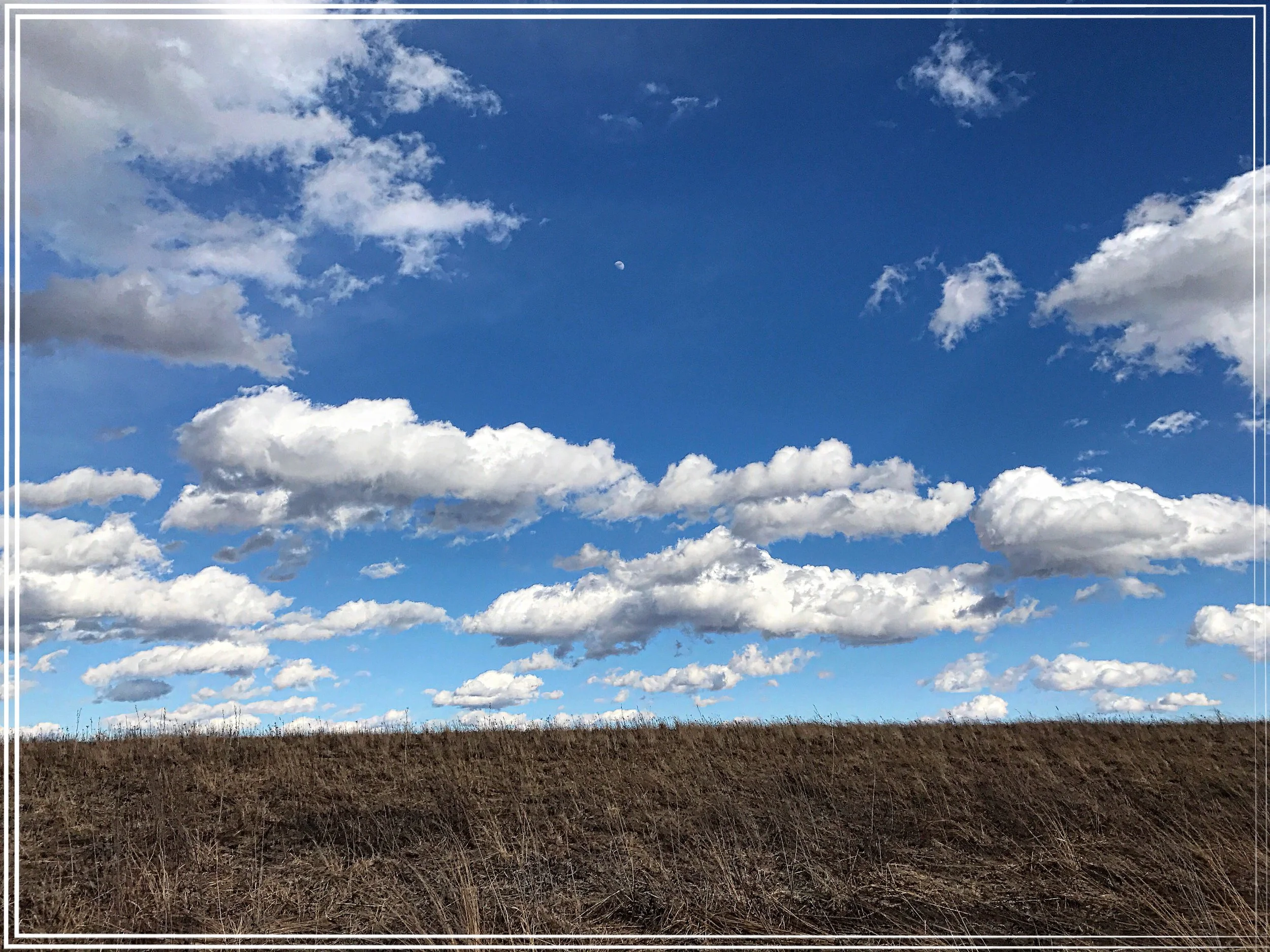
See the moon?
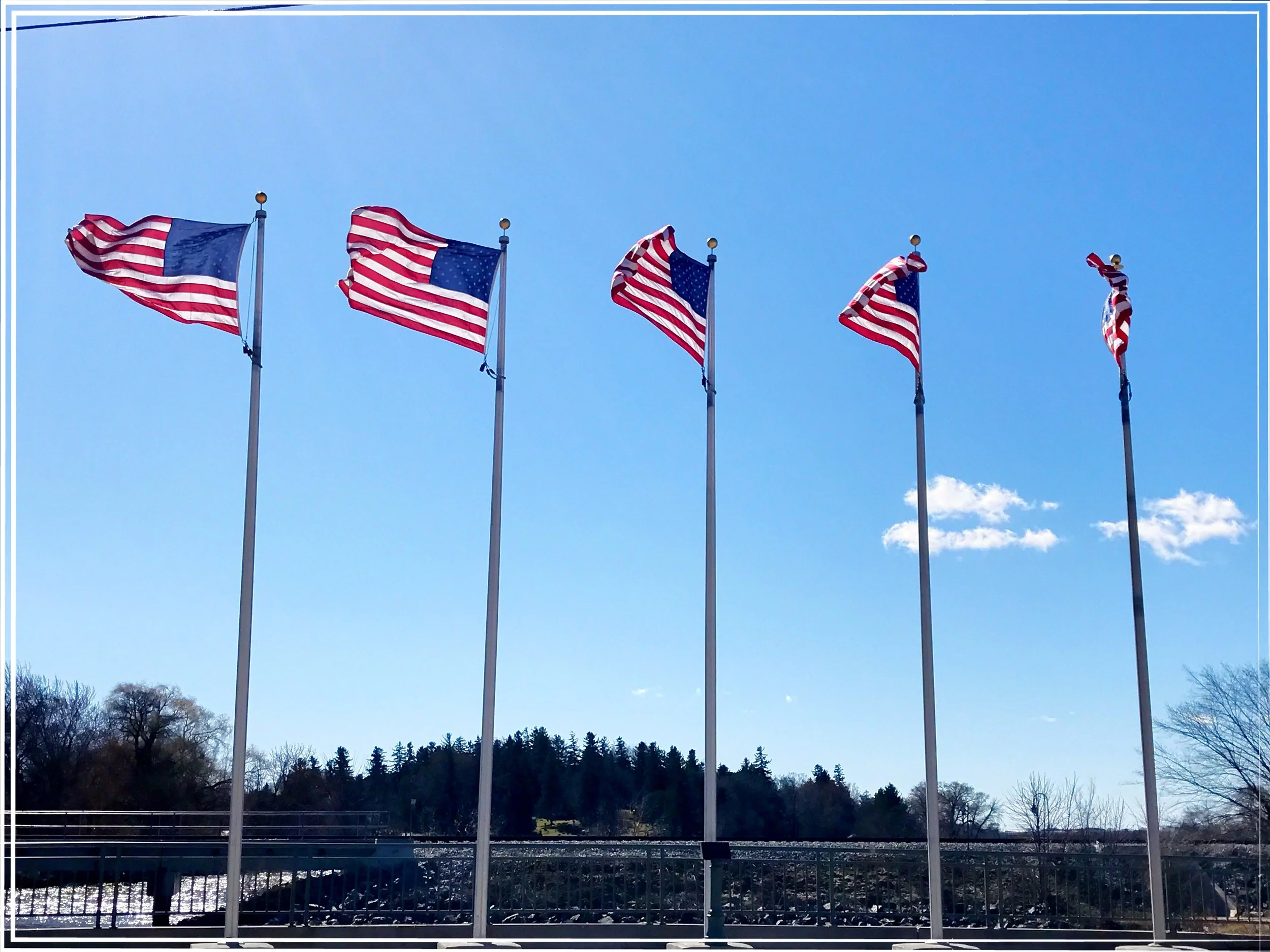
Six Flags?

Getting brushed backwards.
~~~~~~~~~~~~~~~~~~~~~~~~~~~~~~
The fundamental question is: Do citizens of a democratic state have the fundamental right to the highest quality of health care, regardless of income or any other discriminating factor? If the answer is yes, then for-profit private insurance cannot serve as the core enabler of that universal right. If the answer is no, then that democratic state is enabling its own demise, particularly when the greatest amount of wealth in human history is available to the state. This is not socialism, it is a fundamental expression of equal citizenship, for the highest quality of health care, like education, is a universal right regardless of income or other discriminating factors. Or so it seems to me.
Gale warning on Lake Michigan. Line of thunderstorms heading our way after a warm and windy day‚ a day spent on sewing on one hand and computer work on the other, not to mention dog walks.
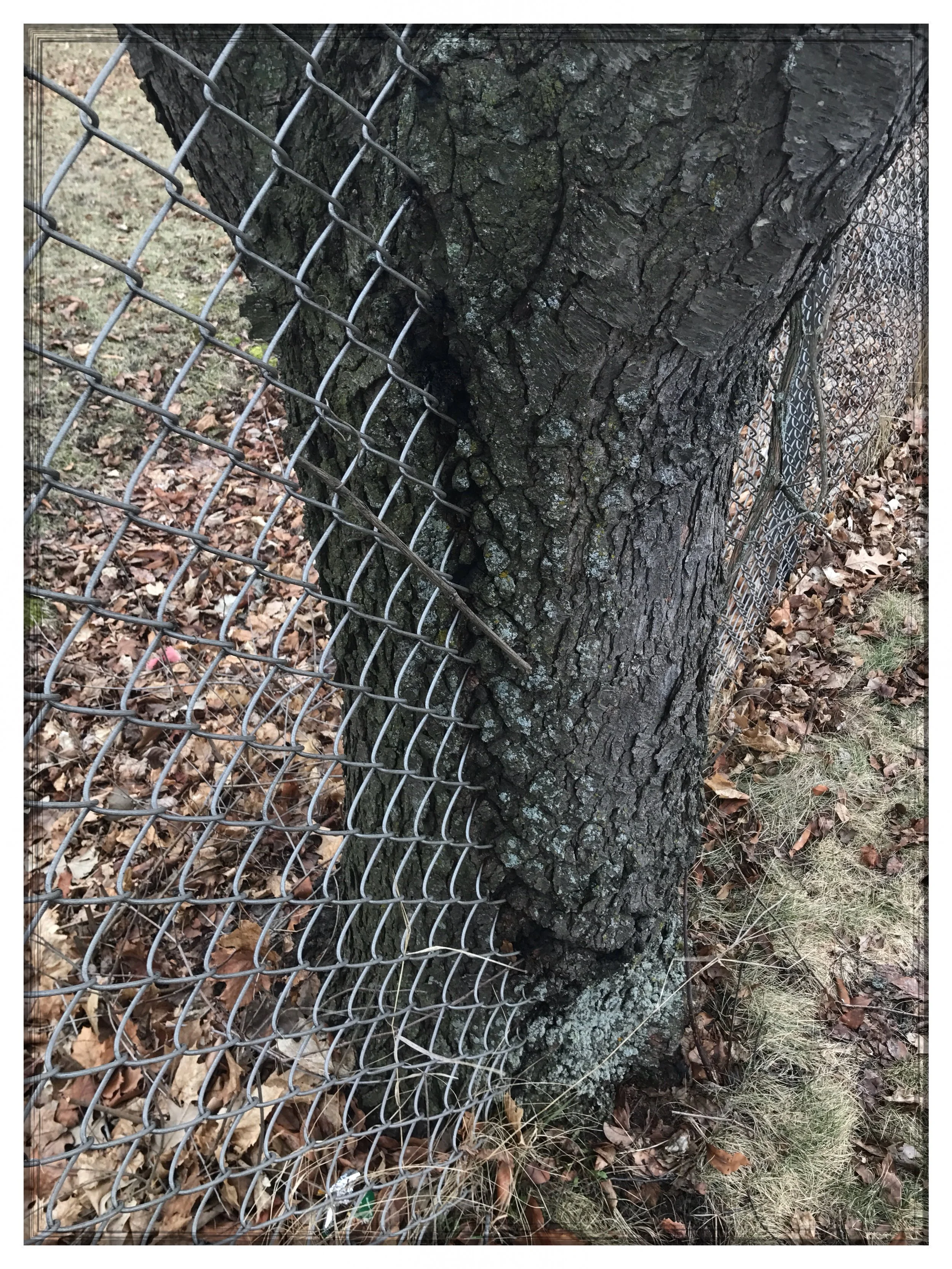
Which side are you on?
~~~~~~~~~~~~~~~~~~~~~~~~~~~~~~~
Dear Senator Baldwin and Supposed Senator RoJo and Supposed Representative Senselessbrenner:
Asian carp pose a serious threat to the Great Lakes' ecosystems and economy, including the $7 billion fishing industry. The leading edge of the Asian carp population advanced over 60 miles in 2015. Existing barriers are not effective against juvenile fish, and larvae have been found less than 50 miles from Lake Michigan. Stopping their progress is an increasingly urgent imperative.
The U.S. Army Corps of Engineers has been working on a Feasibility Study for carp defenses at Brandon Road Lock and Dam at Joliet, Ill. The lock is a logical choke point location to install Asian carp control measures to stop the fish from moving closer to the lake.
Last week he Trump administration indefinitely delayed release of the long-awaited plan. This is unacceptable.
The damage done by carp in the Great Lakes will be significant in Illinois, but it will be catastrophic in Wisconsin, Minnesota, Michigan, Ohio, and New York. Carp will be especially damaging to our Canadian neighbors for whom commercial and recreational fishing along with the whole range of recreational activities that depend on the Lakes make up a significant portion of the economy.
I am asking you to take the most aggressive actions necessary to get the Feasibility Study released immediately and then to provide sufficient funding for the construction of Asian carp control measures based on its findings. Perhaps working with Senator Stabenow would be a good place to start.
The Great Lakes are a unique and priceless resource, essential to the quality of life and economic wellbeing of those of us who live around them. They need to be protected from Asian carp, a most nasty invasive species.
Sincerely,
At Aztalan.

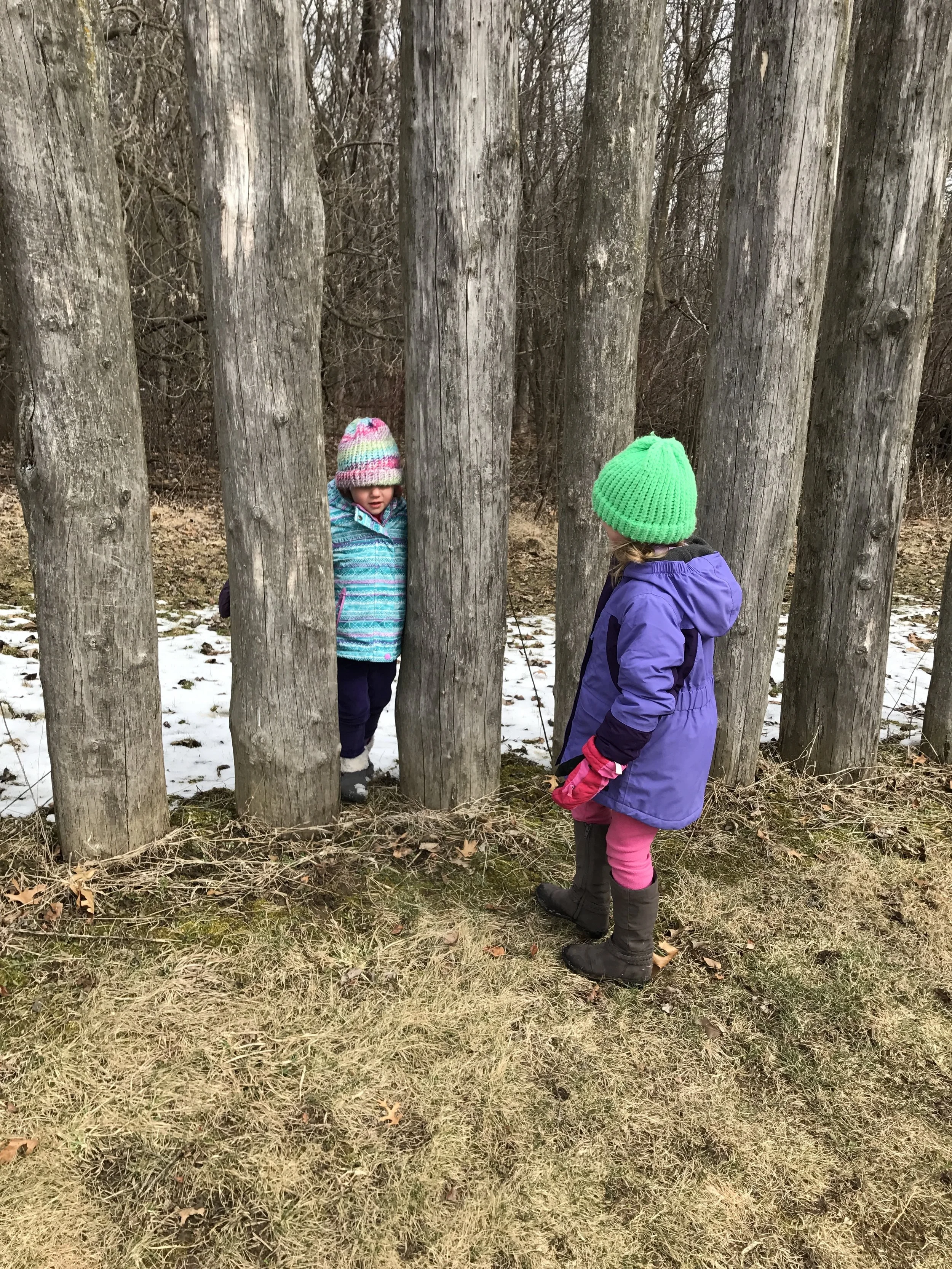

How did you get in there?
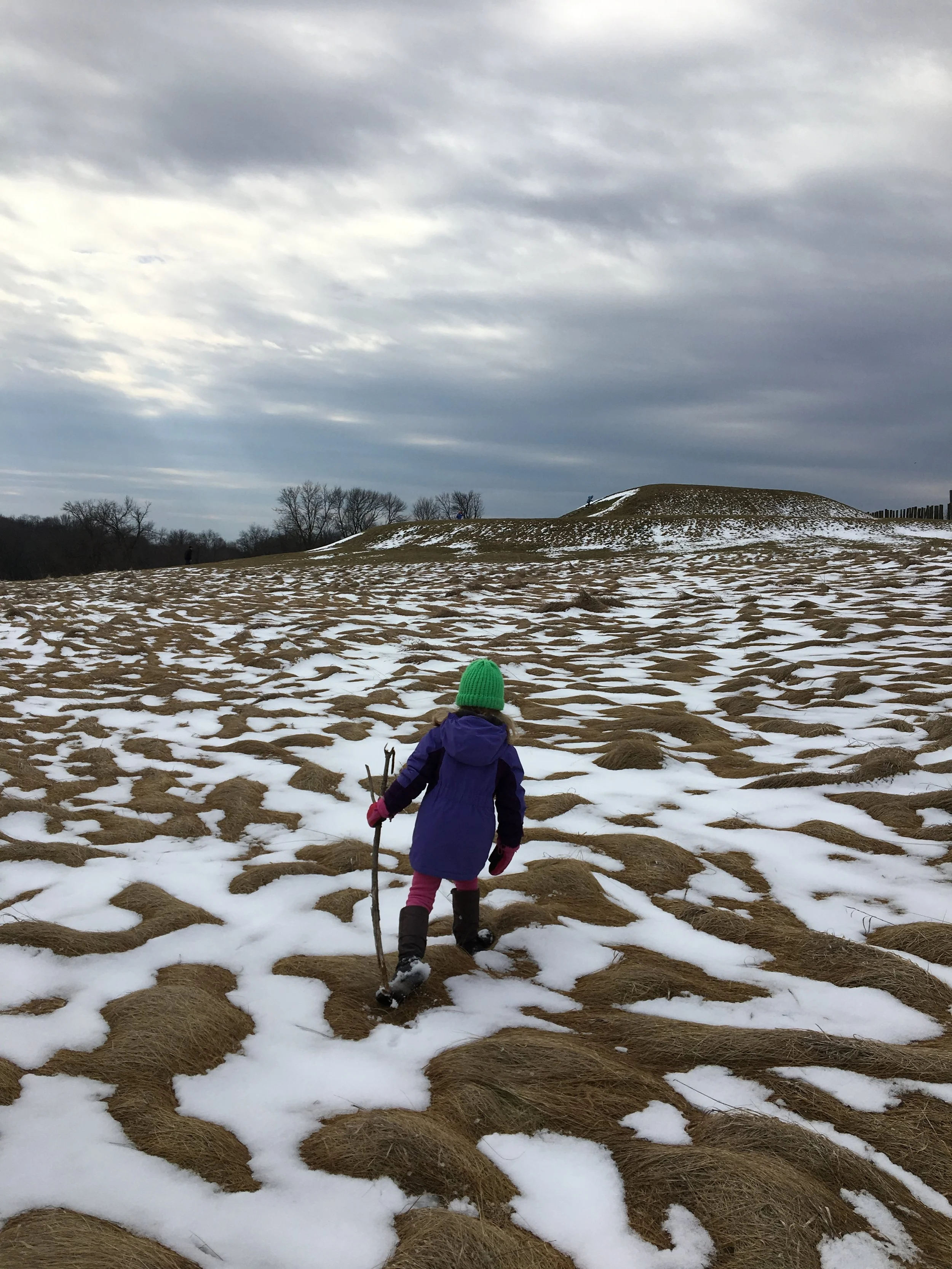
What's that almost at the top of the mound?


A native American village on the banks of the Crawfish River, with a surrounding palisade and several large ceremonial mounds. Occupied for about 400 years before suddenly disappearing around A.D. 1,300.
Perhaps the most important archeological site in Wisconsin. Aztalan was an offshoot of Cahokia (Illinois), one of the greatest cities of the world back about 900 years ago (bigger than London). People got from Cahokia to Aztalan by water—up the Mississippi, then up the Rock, then up the Crawfish, to a fertile spot where they grew corn, beans, and squash, fished the river, and hunted the surrounding woods.
We explored the palisades and climbed the mounds.
But of course, only after a fine breakfast at modern day Amalia's.