Yard Work and Kid Sitting
In Fox Point. Mimi and Katy did lots of sewing.
Compost bins and brush cleaning.
Who is this masked man?
In Fox Point. Mimi and Katy did lots of sewing.

Compost bins and brush cleaning.

Who is this masked man?
... no that's supposed to be "Quill and Scroll", the high school journalism society, which I used to interact with. But that was then and squill is now, and squill proves that spring has officially arrived.
Today was an outside day, with yard work, walks, and bike rides. Pax got in a great workout, including a dip in the prairie pond, which is now quite an immense body of water.

But also some sun. Gale warning and flood warning on Lake Michigan, with 15 to 20 foot seas rolling in to southern shores. Bike ride to the prairie a challenge—uphill and into the blast (but no need to pedal on the way home).

Manitoulin style, but actually in Wisconsin.
All day rain. Again.
Steady, sometimes light, sometimes moderate, but adding up. Ground saturated.

Fields—fallow or flooded?
Mimi is making significant progress on her monumental, two-sided tapestry which is to be hung between posts in Kagawong cottage to attenuate the amplitude of SIPs sounds. Not much time left. And it is going to be marvelous.
... and late morning rain as well. Quite a lot of it, but clearing by afternoon. To Fox Point to see Will and Kate on their return from Texas, and then a brief ride to Manitowoc to check in on Aunt Janet.

Here Will and I are working on a game of Rush Hour (should be called Traffic Jam) in which you have to shuffle vehicles to find a way clear for the ice cream truck.
Katy called on on April 1 from Rockport to tell me that Uncle John's toilet was backed up, and I believed her. In my defense, I had been pre-conditioned to clogs because of the one occurring in the basement here—utility tubs filling almost to overflowing when the clothes-washer finished its drain cycle. Today, our sprightly, voluble, little, local plumber stopped by with his rodder—and we are once again unplugged. (Always useful info here on this blog.)
Cloudy day in the low 50s, with rain, actually, quite a bit of it right now, causing the dusty sump pump down in the bowels to rewake from time to time. The previous pump wore out from lack of use.
That's it for plumbing, today.

Ancient, no, longtime, friend, fellow teacher, sailing companion, and all around good guy (also Cub fan and Chief Lemming) turned 70. We were glad to attend the festival.

...among other things. Bri, Ellie, Maddie, and Becca down to Whitewater for the world's greatest waffles. Then a long bike ride, some roller blading, playtime at the playground, and a picnic in the park. Beautiful weather for all that, and a very nice change it was too. Afternoon fun in the back yard where neighbor Bill came over to set up his trap, seeing as how Mimi suspected something was again living under the woodpile. The kids wanted to stay to see if the trap would actually catch anything, but we said that was unlikely in such a short time. But, a short time after the visitors left Mimi and I looked out and saw the trap had been occupied.
We drove porky pig about five miles out of town and resettled him in a lovely wild place by the Crawfish River.


Correction. Not a hedgehog. A ground hog.
In spite of the bad weather, Pax and I got in a ride to the prairie, which, after all the rain, is greening up—and would green up a lot more if the temperature would ever go up.


Fun morning in O'wock playing with Maddie and Becca. (Ellie, poor girl, is so old she has to be in school all day. (Mimi spent the night there last night, so she got in some Ellie time.)
Steady, cold rain rattling the windowpanes. The gutters are gurgling, Pax is bored, and Buddy is reluctant to ramble.

Given the conditions, I decided to write up a review, for the Expositor, of Dan Egan's new book, The Death and Life of the Great Lakes.
REVIEW
Dan Egan’s The Death and Life of the Great Lakes
by Jim Nies
It’s a grim but gripping story—the new book Death and Life of the Great Lakes, by Dan Egan, a longtime reporter for the Milwaukee Journal Sentinel. Egan, whose beat has been Lake Michigan and the other four big lakes connected to it, has twice been a finalist for the Pulitzer Prize for his Great Lakes reporting.
Two hundred years ago the Great lakes were an astonishing ecological paradise, vast inland seas comprising more than 20% of Earth’s fresh water. They were home to a balanced web of life, fine-tuned over ten or more thousand years, that included sturgeon, pike, musky, perch, bass, whitefish, and lake trout. But, for all their beauty and bounty, the Great Lakes were ecologically naïve, meaning that they had evolved, since the retreat of the glaciers, in isolation from the rest of the world’s aquatic environments.
The first people to settle around the Great Lakes lived in harmony with the natural bounty. But then came European settlement and the view that the Lakes were primarily an exploitable economic resource—apparently limitless fishery, advantageous industrial site, convenient sewer, and watery highway into the heart of a continent.
The map of North America “practically taunted the Unites States and Canada” to try connecting the Atlantic Ocean with the Great Lakes. First, in 1825, came the Erie Canal, connecting the Hudson River to Lake Erie. Then in 1829 the Welland Canal, which was built to bypass Niagara Falls. Then, in 1959, the complete St. Lawrence Seaway. All were touted as engineering and economic marvels, sure to bring unprecedented riches to the heartland. Both ended up costing the Great Lakes, and eventually the whole continent, dearly.
Dan Egan calls the Canal and the Seaway the “Front Door,” a door that has let in some truly obnoxious invaders—among them the sea lamprey and the alewife.
In the 1890s the annual commercial lake trout haul on Lake Michigan was more than 8 million pounds, with similar amounts coming out of Lakes Huron and Superior. In the 1940s the annual harvest of trout and whitefish across the Lakes was somewhere around 100 million pounds. Then, with the arrival of the lamprey, native fish populations crashed. By 1960 the whitefish harvest on Lake Michigan was less than 25,000 pounds and the trout harvest was zero.
With lake trout gone, the invading river herring, or alewife, was free to reproduce, and by 1965 it comprised about 90 percent of the fish mass in Lake Michigan. In July, 1967, thirty miles of Illinois shoreline around Chicago was inundated with billions of rotting alewife carcasses, and cleanup required bulldozers and hundreds of million dollars. The whole think stank.
What happened next is fascinating—and therein lies more of Egan’s tale—about what happened to and is still happening with the lamprey and the alewife, and about the lake trout and whitefish. On top of that, there’s the whole up-and-down saga of non-native coho and chinook salmon, and how they got here and what has happened since.
Egan also tells the story of two other invaders, the appalling zebra and quagga mussels, who hitched a ride into the Great Lakes in ocean-going freighter ballast water—creating an extraordinarily expensive and ongoing disaster.
Once he finishes the “Front Door” Egan takes a look at the “Back Door,” the Chicago Sanitary and Ship canal, opened in 1900 to flush the city’s sewage down to the Mississippi and to provide a navigable waterway between the Great Lakes and the continental interior. This back door presents a number of problems; among them a 1.5 billion gallon a day diversion from the Great Lakes, a path for all the invaders who came in the front door to head out to the western half of North America, and a potential entry point for perhaps the most obnoxious invader of all, the Asian carp.
The Death and Life of the Great Lakes also explores two other crucial Great Lakes issues—toxic algae blooms and fluctuating water levels. Lake Erie is North America’s “dead” sea. The thirst for Great Lakes water is great and growing. Dredging combined with erosion in the St. Clair River has opened a huge Michigan/Huron drain.
In some ways The Death and Life of the Great Lakes reads like a crime thriller. It’s a story of greed, shortsightedness, incompetence, and “a deficiency of government.” But good things have happened, too. Egan documents scientific breakthroughs and environmental heroes, “stutter steps [forward} and stumbles backward.”
It may be possible to restore the Great Lakes to some kind of ecological balance and to protect them from myriad threats. But the future remains uncertain. Untreated ballast water can still make it into the Lakes bringing with it the potential for dangerous additions to the already present 186 invasive species. Asian carp are knocking hard on the “back door,” and the Trump administration has slowed if not stopped efforts to strengthen defenses. The St. Clair River continues to roar. Waukesha is the first diversion under the Great Lakes Compact.
Our idea of the Great Lakes does seem to be changing, however—we seem to be moving from a mindset of exploitation to one of restoration and preservation. Egan says:
a “12 year-old, you see, is perhaps the best hope the lakes have to recover from two centuries of over-fishing, over-polluting, and over-prioritizing navigation: almost every person I’ve ever talked to who cares anything about the lakes and the rivers that feed them does so because they have a childhood story about catching the fish that swim in them.”
Those of us who live on or visit the largest freshwater island in the world certainly have many such stories. And we will almost certainly find The Death and Life of The Great Lakes a great read.
Lots of both. Peepers peeping and robins chirping.

And some ducks.
Gray day, with a chilly wind from the north-east. Rain now. All of which leads to thoughts of southern climes.
Pax very enthusiastic about reestablishing his domain in the park and around the block. On top of that, Buddy is here, so we are well set in the dog department.

Cloudy, chily morning, with jacket required, but sunny and pleasant by afternoon. The bicycle found itself washed and lubed—to make up for its long ride in dust and rain. And then there was grocery shopping, seeing as how the cupboard was bare.
There are signs of spring here, but the season is yet more to be anticipated than to be experienced.
Which equals twelve. (Hours on the road)
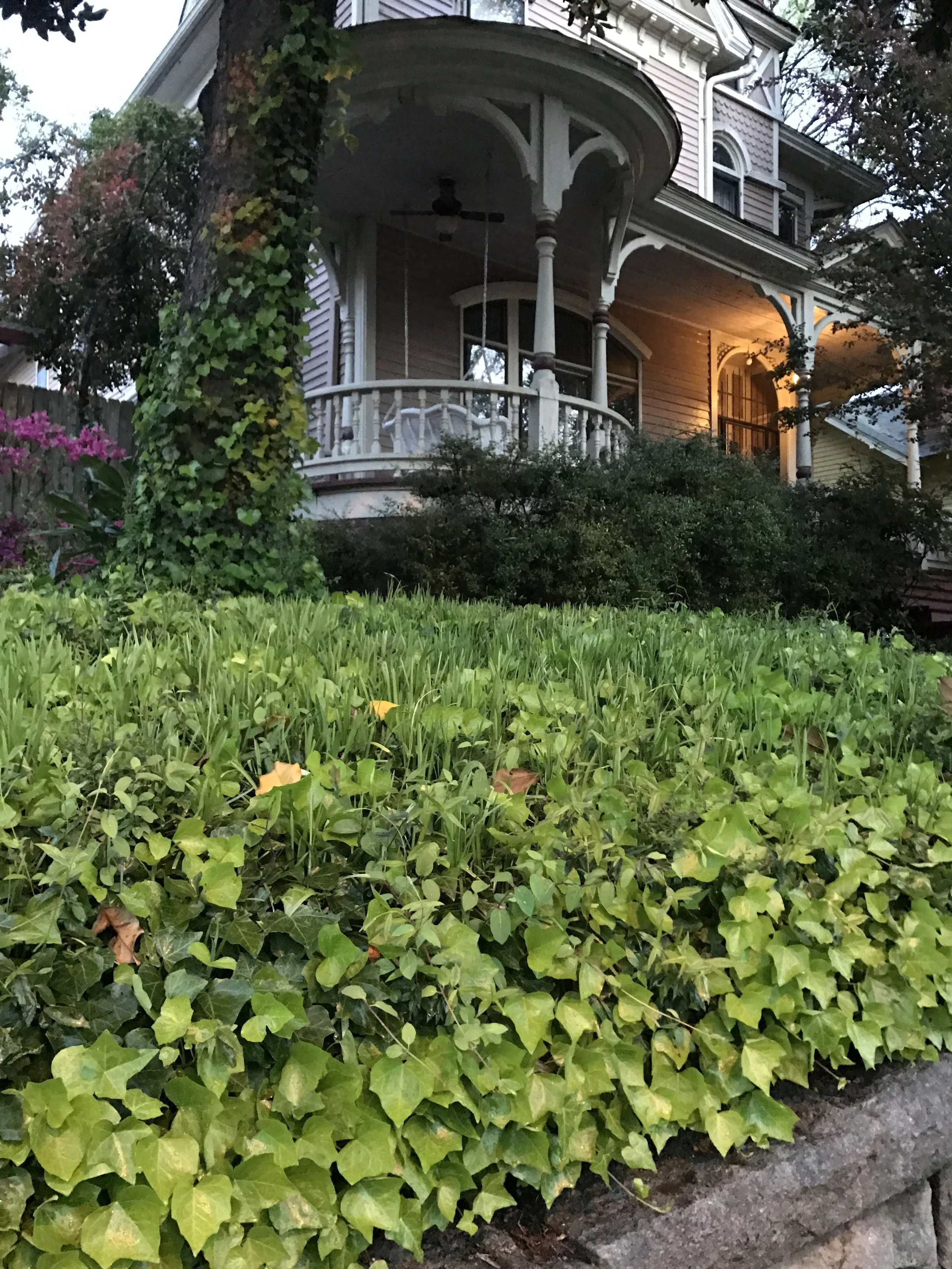

Long, long drive, with rain or mist much of the way. Summer in Texas. Late spring in Little
Rock. Early spring (or so it seems in the dark) here in Whitewater. Still winter (by all reports) on Manitoulin. So, in a way, we are once again following in the footsteps of Edwin Way Teale, and traveling "North With The Spring."
...and that takes some doing.

About an hour's worth of backup on I30 east of Texarkana, but we made it to our lovely Little Rock oasis well before dark. Halfway home from a fine time.
On the road tomorrow.

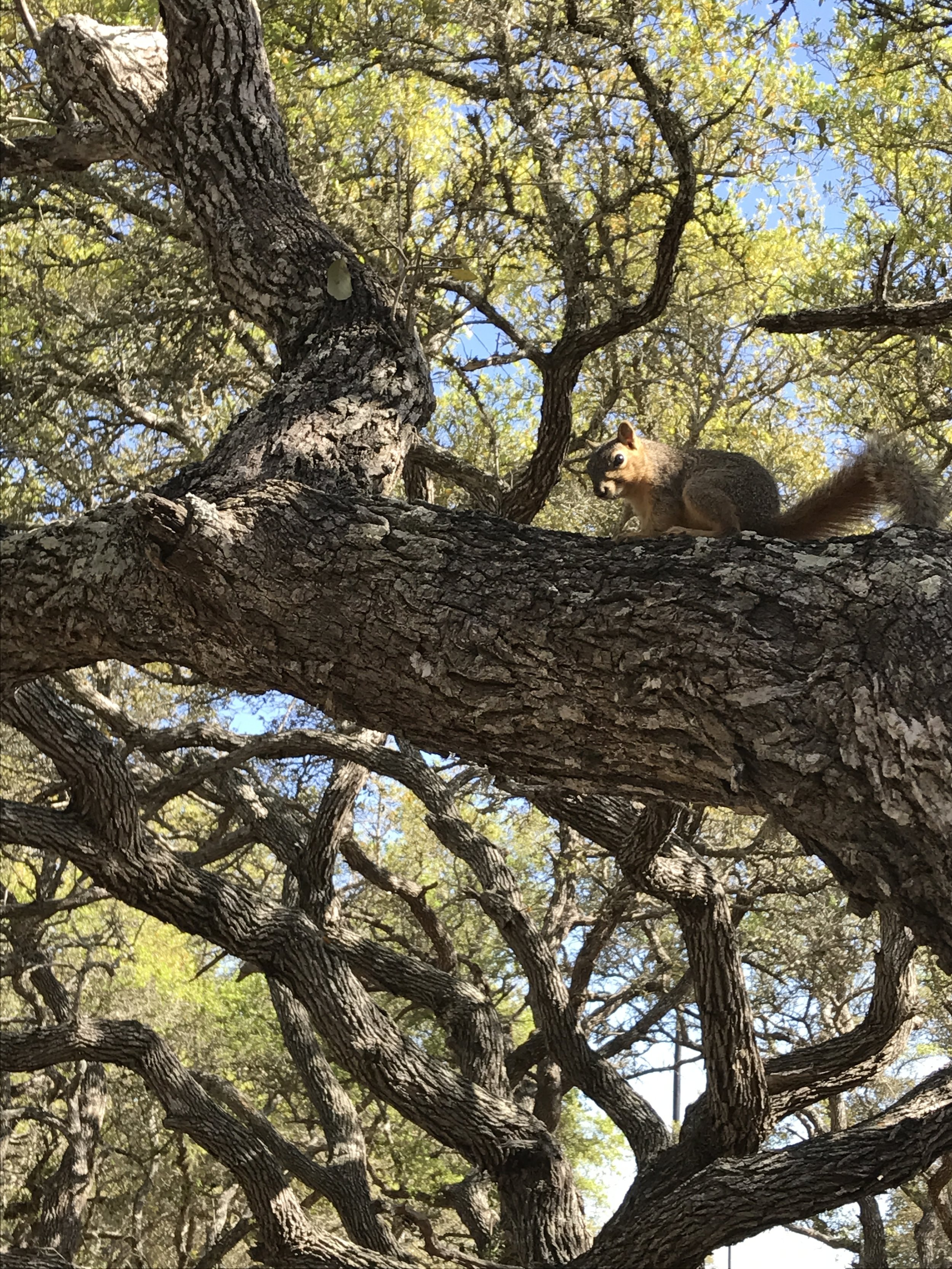
Live oak forest.

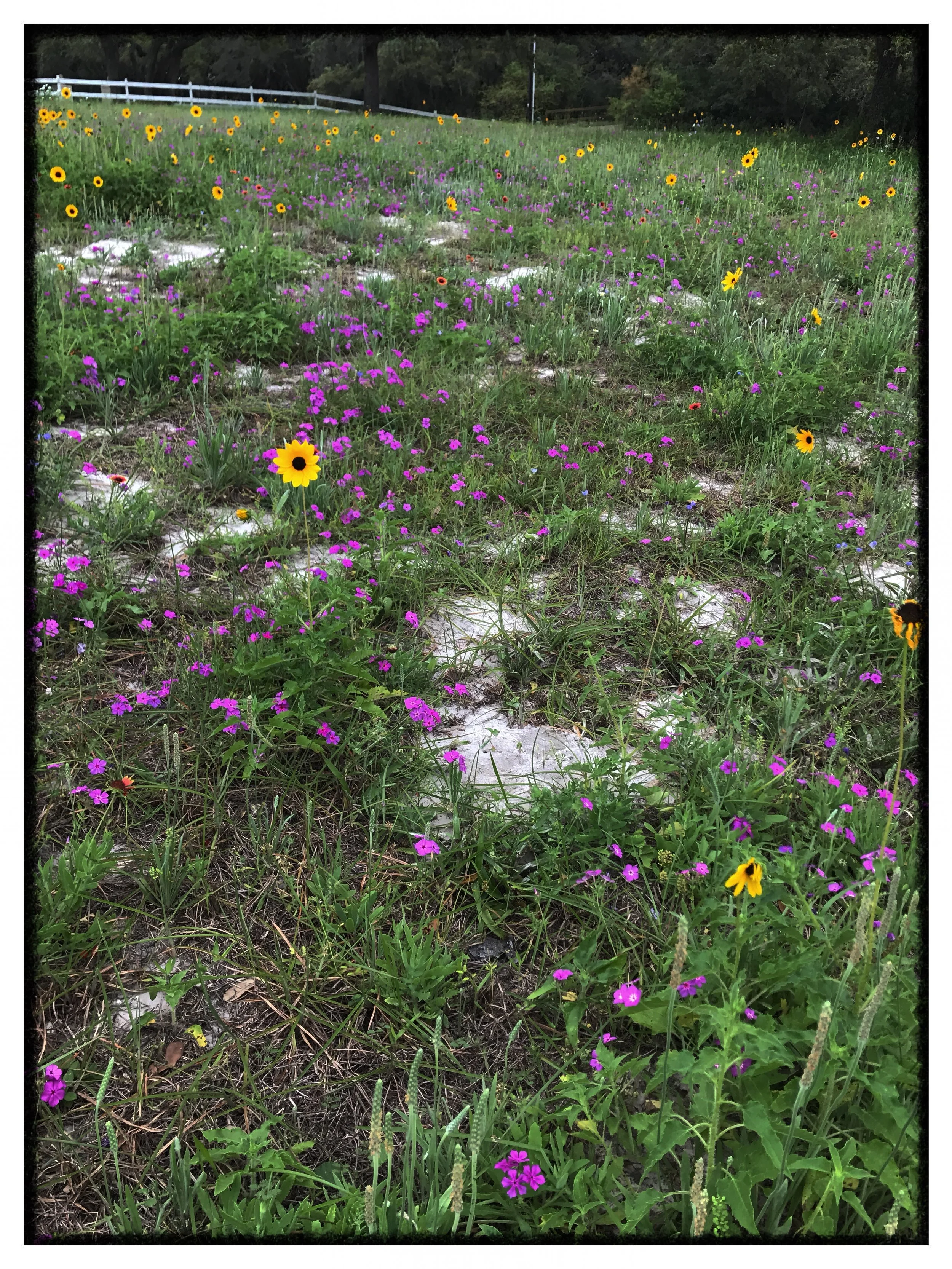
Sandy terrain.

Of course, one more visit to Captain Benny's.
Warm and windy.
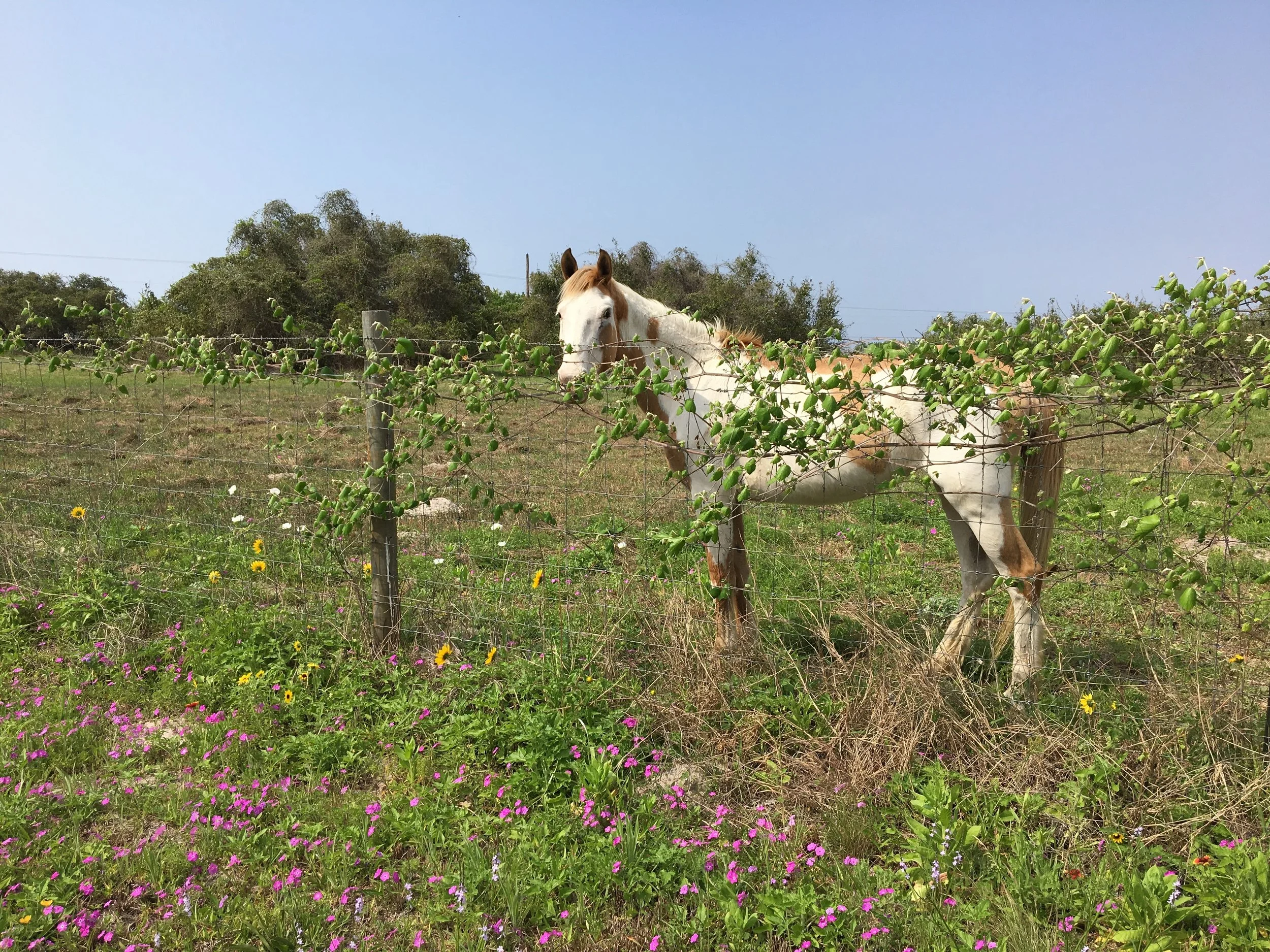
Luna, the rescue horse. She likes apples.
It's been a summery spring break.


We skipped the boards but expect others won't. Best time to visit the pool is noon to two, the lifeguard said. Then you can have it almost all to yourself.
NCAA basketball tonight.
The best place for oysters, shrimp, and fish tacos this side of the prime meridian. And today, it being Wednesday and we getting there early, not overly crowded.

Another warm and sunny day.
Interesting weather pattern here, in place ever since we arrived:
At night the wind drops and the humidity seems to build. In the predawn hours everything outside is dripping wet—through the partially open bedroom window I can hear drops falling from roof to patio and everything else below. Morning comes late (being at the western edge of the central time zine at this time of year and with daylight savings in effect). When the sun finally does rise it’s hot and bright and the atmosphere is muggy. By mid morning a wind has come up and the humidity has dropped. The thermometer starts pushing towards 80. By late afternoon the wind has built to a strong blow, and the air no longer feels humid. Then the sun sets, the wind quits, and moisture again settles over the land.
Little trip down to Port Aransas.

Miles and miles of beach. Water warm enough for swimming.

The south jetty, with a shrimp boat and freighters (way off).

Pax got into his wave chasing game, the one in which he races along biting the rollers. This time he found that the waves didn't taste so good and wanted a good long drink of fresh water once we got back to the car.
Both celebrated here in sunny, south Texas warmth. Long walk in Memorial Park, bike ride, hot-tubbing, steak dinner--various activities distributed amongst us. Happy birthday, Mimi.
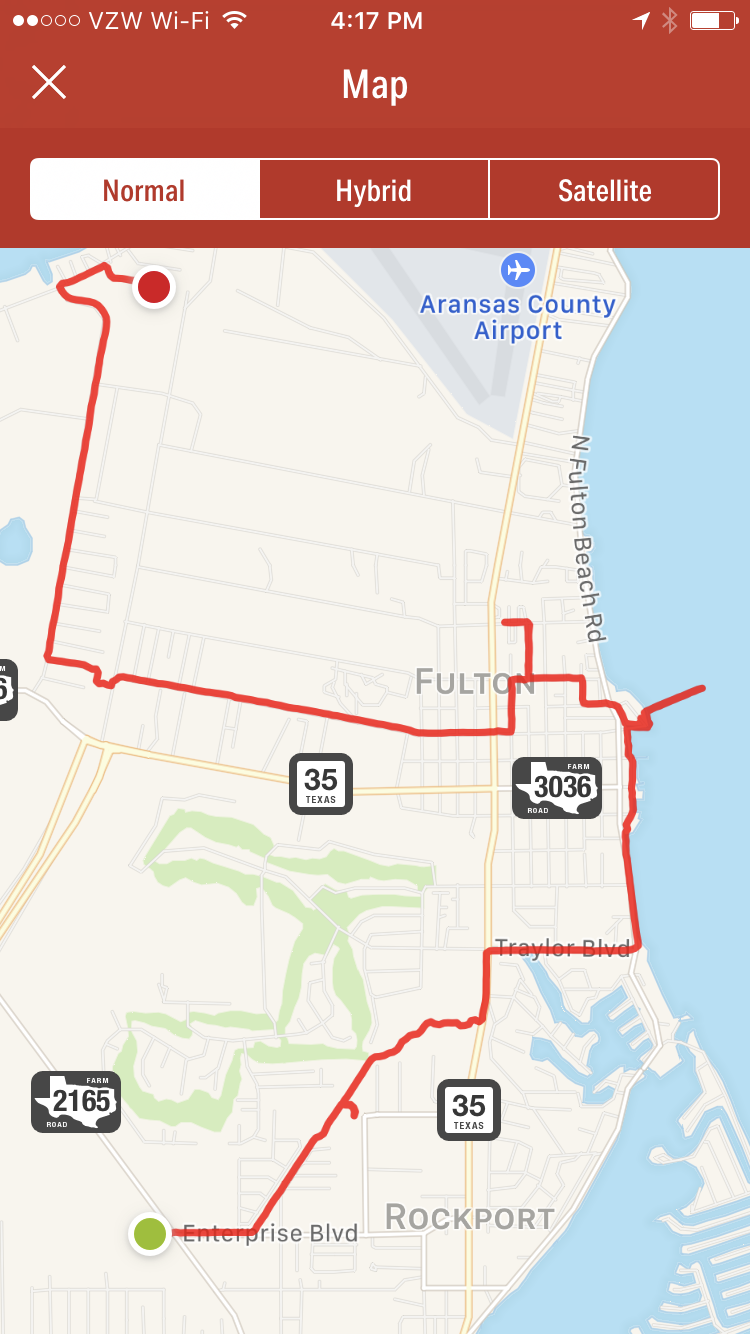
Note on this map of today's bike ride how I was able to ride quite a way out into the bay. It's kind of like skiing barefoot. The little hook near the beginning of the trip (green dot) was a quick detour to the swimming pool. The angular jog fairly near the end is a walk through the woods from one road to another.